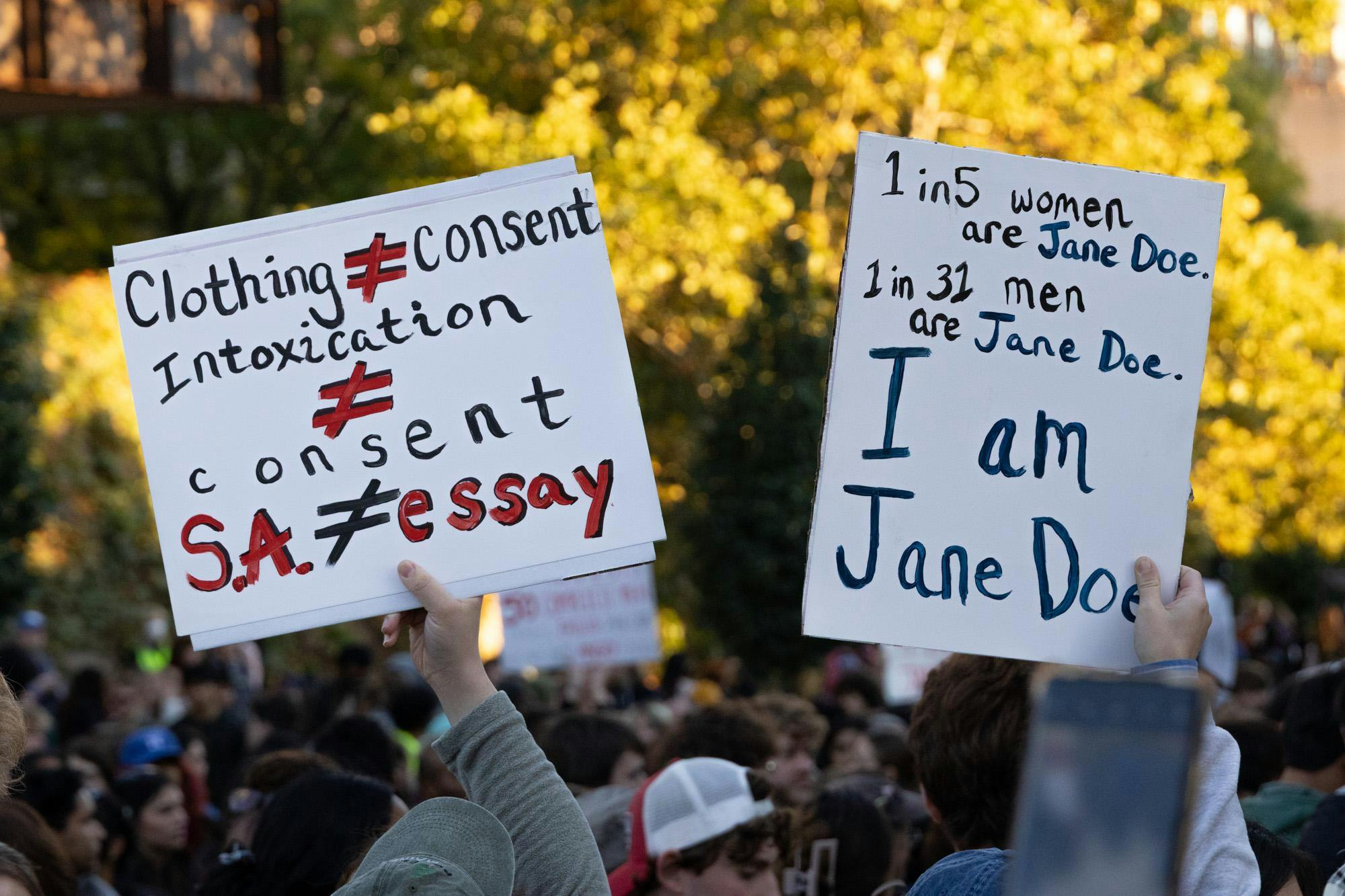
In light of the lawsuit regarding the alleged gang rape of Jane Doe back in October 2024, many students have returned to Sidechat in order to discuss the media’s response. From an anonymous account on Sidechat, I asked Cornell users why so many of us have flocked there during this time of crisis at our school. In response, I received a minorly unhelpful 46 upvotes and one affirming comment about Sidechat’s streamlined and student-only nature. However, a major aspect that attracts students to Sidechat was not mentioned: anonymity. Last spring, The Sun ran a piece questioning the ethics of Sidechat and its complicity in campus hate speech, specifically because anonymity makes it hard to hold people accountable. Call it power or cowardice, this facelessness awards students the ability to voice their thoughts without fear of real retribution, making Sidechat one of the most honest places on campus.
While the app usually consists of memes and musings on prelim results, you can find that in times of crisis there is rapid messaging in search of new information, others’ takes, levity and validation. Many times, when something happens at Cornell, the entire student body rushes to Sidechat to hear what other students are saying about the situation. Whether it's a lack of transparency from the administration or general curiosity, students anonymously flock to share their thoughts, see what their peers are saying and form a general mood based on what they find.
Many students see these anonymous chat boards as necessary outlets to discuss the media response and public criticism of Cornell’s involvement in Jane Doe’s lawsuit. Many students find that the outside world is harping on not only what we believe to be Cornell’s mishandling of the lawsuit but also the perceived moral failures of the students at Cornell. The sweeping generalizations about who the students of Cornell are prove to be less helpful for the prevention and condemnation of sexual assault and more helpful for the divisive and rage-baiting ends of the algorithm. The consensus from Sidechat is this: The student body is enraged about what allegedly happened to Jane Doe two years ago, but the classification of the situation as a rare case unique to Cornell is harmful to both survivors at large and the students of Cornell.
Students feel attacked and ostracized by the outside world due to the onslaught of criticism and assumptions about how we feel about the new revelations in Jane Doe’s case. The assumptions mainly pointed out on Sidechat are that social media commentators claim most students are complicit in what happened two years ago and must pay the price alongside the alleged perpetrators. This homogenization of how Cornell students feel about the administration and the harrowing acts that occurred two years ago is, at this point, a fable. Remarks such as “we’ve lost the plot” fully encapsulate the feelings of Cornell students. What we can learn from Cornell’s Sidechat is that this aspect of social media’s response ultimately detracts from the point of the lawsuit.
Students have had a multitude of reactions to the current discourse on Sidechat, ranging from those who feel the need to defend Cornell’s reputation, those whose disgust is fueled by Cornell’s silence, those worried about the weight of prestige in their degree to those resentful of the case. This resentment can be dangerous because Sidechat can become a breeding ground for misinformation and emotional dumping that exacerbates distrust in institutional media and the support for survivors. At points, Sidechat has riled up pride where it doesn't necessarily belong, causing a losing ability to grapple with the nuance of the situation.
As the case progresses and Cornell continues to be headline news, Sidechat currently is a litmus test for how students really feel about the public responses to the lawsuit, not necessarily the lawsuit itself. The questioning of Cornell student's safety at the school and personal character is disingenuous and lacks true introspection into life at Cornell, leading to tension and extreme frustration amongst students.
While the general public had no knowledge of this brutal event until two weeks ago, half of Cornell’s student body was well aware of the event and had shared their thoughts denouncing the alleged attack on Sidechat in 2024. This context of the timeline is key to understanding why a portion of the discourse internal to Cornell is about the response rather than the case itself.
There is a collective mourning of our understanding of life at Cornell due to the reality of the ethical and moral failings of those who were elected to lead us and ensure justice. Sidechat reflects the key tensions on campus and in the discourse surrounding sexual assault at large. Students’ posts show how easily the ethical conversations surrounding trauma devolve into identity politics, virtue signaling and black and white thinking. Yet, examining this discourse is important; it forces us to ask ourselves questions about what performance is when it comes to holding others accountable. What are our true intentions in supporting movements? What happens when you’re on the receiving end of negative press? Do you call yourself complicit or self-preserve? The spectrum of responses can be seen on Sidechat, uninhibited and without consequence. Yet, the general reaction from students is that they have found rationality in other students’ comments. Is this anonymous validation without mediation an inhibitor to progress or a necessary catharsis for the frustration of being blamed for others’ actions?
What happened at Cornell two years ago exists in a series of systemic abuses against victims; it is unique in its virality but not in its broad presence across all campuses. Most students of Cornell vehemently condemn what happened to Jane Doe two years ago and all mishandlings and erasure of her case since. But as some users stray away from this true project of changing rape culture, Sidechat users’ responses teach us not to devolve into the performace of change by sensationalizing Cornell.

Presley Grauer is a member of the Class of 2028 in the College of Arts and Sciences. She is a contributor for the Arts & Culture department and can be reached at pjg225@cornell.edu.