


Professor Cynthia Robinson is the Mary Donlon Alger Professor in the Department of History of Art & Visual Studies and an art historian. She can be contacted at cynrobin@earthlink.net.
Could we? Could we, as a University community, have made choices and taken actions other than the ones we did, such that the alleged gang rape of Jane Doe might never have occurred? This question is often asked in the aftermath of rape — “sexual misconduct” seems hardly adequate — such as the one allegedly perpetrated, on our campus, two years ago, on Jane Doe, now coming tardily to light. I do not ask this question rhetorically; I would not pose it if I did not believe the answer to be “yes.”
I was older than Jane Doe — 26 — when it happened to me. I was in a place, and a situation, that put me at risk. According to the lawsuit, she was at a party hosted by a fraternity, a situation into which I put myself more times than I can count during my undergraduate years; when my rape happened, I was hitchhiking along the border between two European countries. Similar to Jane’s account, I had been drinking. I don’t know what Jane was wearing — I’d imagine clothes like any young woman would wear to a party. On the night I was raped, I was wearing a short skirt. And a halter top: it was July. Like Jane says, I was raped by more than one person. Two is not as horrific as seven; one is far too many.
It is true that Jane and I each put ourselves into the situations, and the condition, that preceded both my own rape and her alleged one. Such observations concerning Jane have been plentiful throughout the past week. I have heard similar statements regarding myself; those who make them are usually not well informed on the issue of rape. We need to do better. Rape is a difficult topic and misconceptions abound. No one is immune: I deleted “led to” in the opening sentence of this paragraph and replaced it with “preceded” — survivors fall into linguistic traps too. The decisions and actions taken by one young woman in a past now more than three decades distant, and by another a mere two years ago, do not make us deserving of what we got, nor did they causally determine what happened to us. It is disheartening that this truth still needs stating, but it does.
I believe that we as a University community might have averted Jane Doe’s alleged gang rape, via sustained, open, public and ongoing dialogue surrounding the topic of sexual assault. Not that demonstrations are not welcome and needed after the awful fact, but with intentional, thoughtful, purposeful dialogue, designed in the interest of raising awareness, educating and including (everyone, not just women, and not just students), we might have obviated the need to demonstrate.
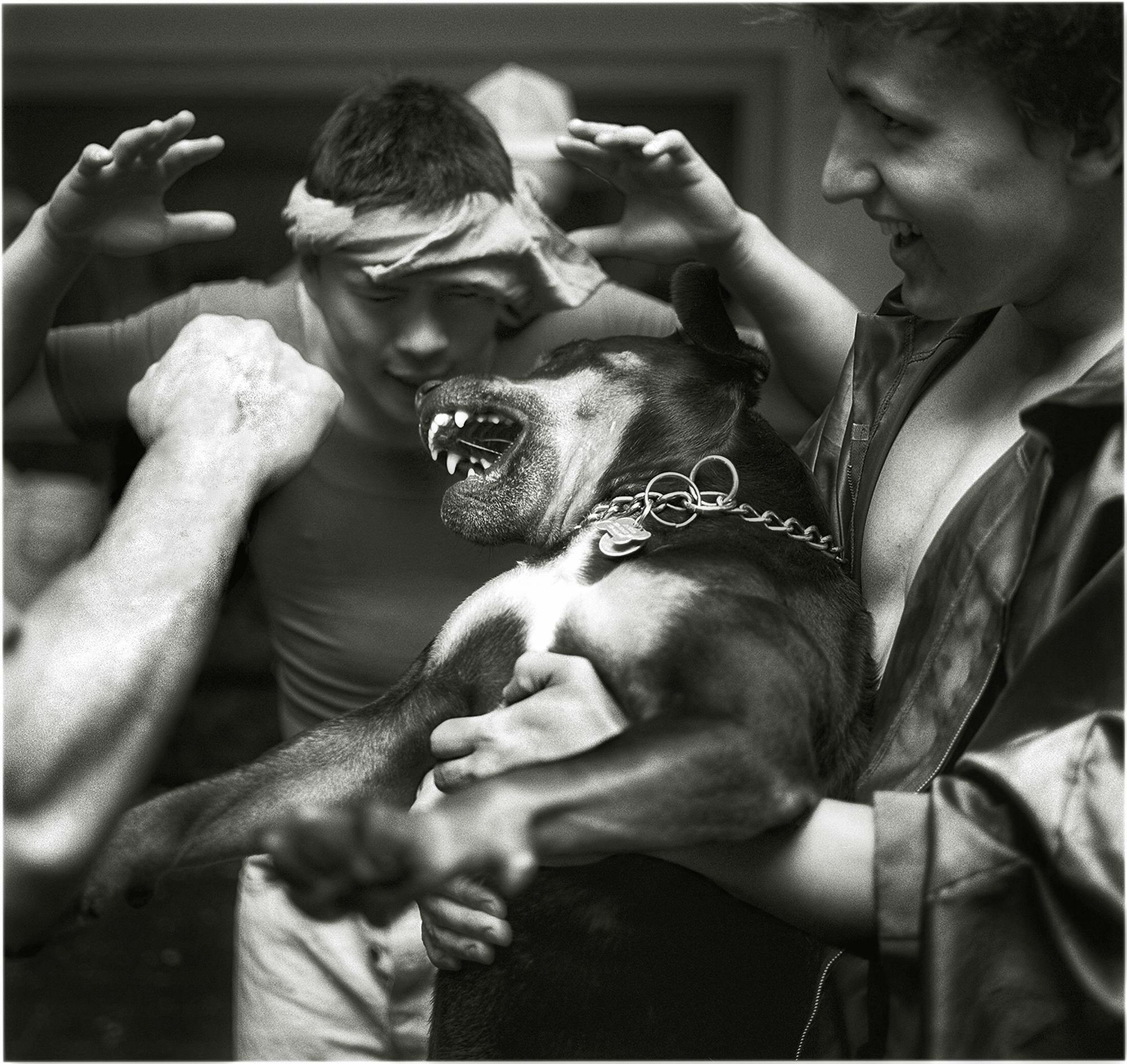
I had not yet begun to speak publicly about my own status as a survivor until a friend and colleague, Andrew Moisey, asked me to contribute an essay to his photobook, The American Fraternity. Its photographs showed me, frame by frame and in excruciating slow motion, just how a fraternal association that requires such lofty pledges and high-minded objectives of its members, can slide, and then tumble, into depraved behavior that gravely harms perpetrators as well as victims, and how such behavior becomes normalized, even institutionalized. Pictures indeed speak a thousand words. We might need to see the truth before we can fully acknowledge it and accept collective responsibility for changing it.
Those images reached far back into my past; as I said, I had attended dozens of such parties during my undergraduate years and it’s fair to say I was inebriated at all of them. Only sheer, dumb luck saved me from a morning after like Jane Doe’s (my turn would come later). The images compelled me to see them, and to see my younger self in them. They compelled me to think about them — once seen, I couldn’t get them out of my mind. They compelled me to write about them, and they also met me where I was. Where I am still. For any survivors reading this, my deepest sympathy, solidarity and apologies if any part of what I have said touches a raw nerve, or even plunges you down, right back there. As all survivors know, ‘it’ never truly goes away. A sound, a face, a song, a smell … At any time, in any situation, any one of those things can do me in for the day.
Much is often said about what the publicity surrounding legal adjudication of rape does to the lives of the accused perpetrators, especially if they are university students. But what about the longue durée of the life of the survivor? As I reach retirement age, I can see, all too clearly, the terrible toll that one incident has taken on all manner of aspects of my life. The worst of all nights haunts me still; I do not expect the unwelcome visitations to stop until I do. Jane Doe’s own worst night, likewise, will almost certainly haunt her to the end of her days. Two years is an unacceptable amount of time to have transpired before this terrible incident became known to the members of the University community, to the Ithaca community and to communities beyond. Sunlight and disinfectant should have come much, much earlier. The discomfort occasioned for some by transparency, and by open, public, and sustained dialogue, seems a small, even negligible, price to pay, if that transparency and that dialogue might prevent even a single rape.
Guest authors are people who submit pieces to The Sun and undergo the same thorough editorial process as any Sun staff writer. The Sun does not endorse the views of any guest author. If you would like to get in contact with the author of a Guest Room article, please use the undersigned author's email provided at the bottom of the article.
The Cornell Daily Sun welcomes any and all submissions of guest columns and letters to the editor for review. Please visit this website for information on how you can submit as a guest author to The Sun: https://www.cornellsun.com/page/join-the-suns-opinion-section. If you have any questions regarding this process, please contact us at associate-editor@cornellsun.com.


