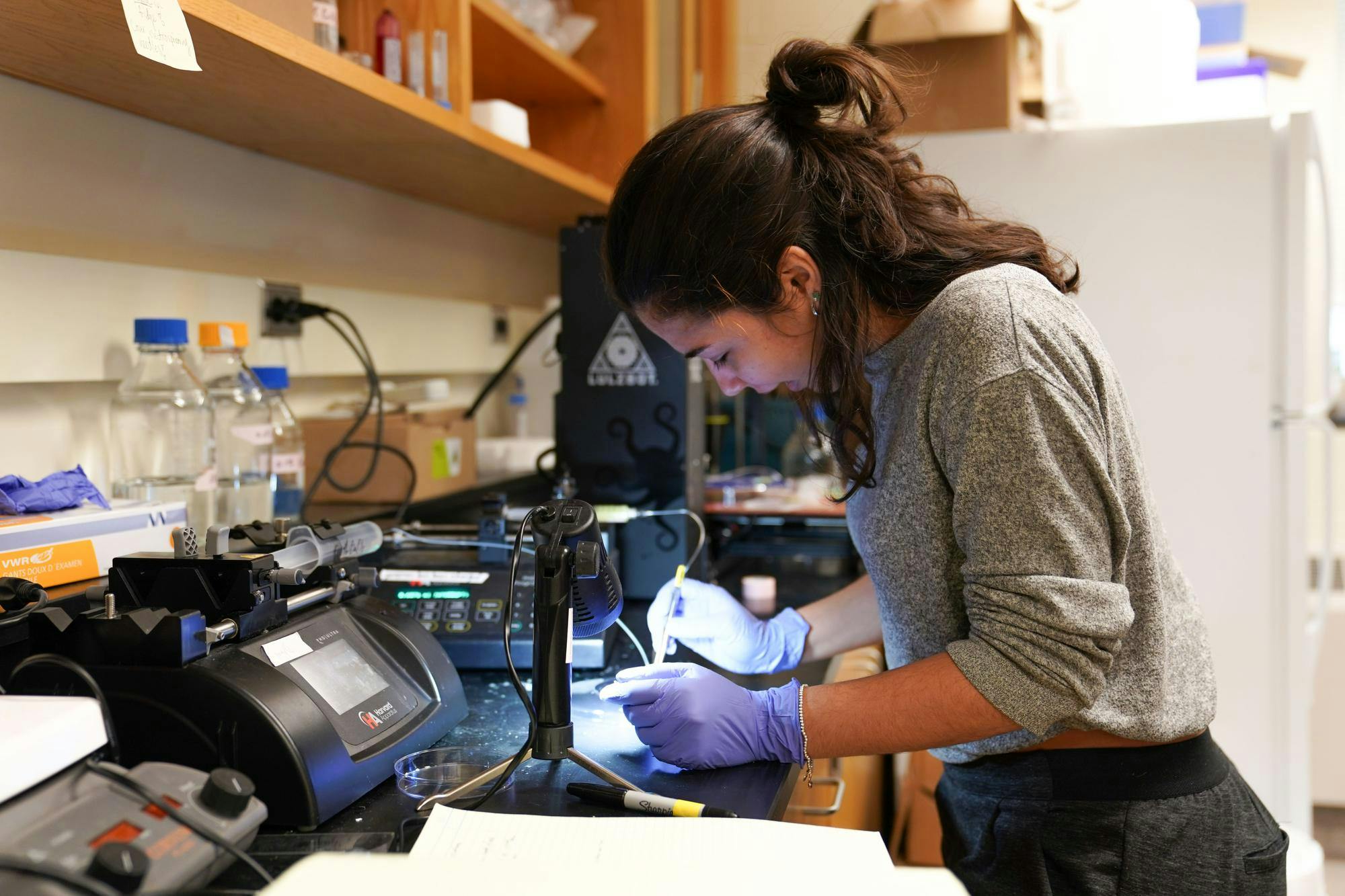
Welcome, freshmen! As you settle into life at Cornell, you may have heard one particular extracurricular come up among your peers — research.
As a research university, getting involved with research is extremely popular at Cornell. For many incoming students, however, the word research may still be a black box. Does “doing research” mean curing cancer, or tending to overgrown cells? How does one get started with this so-called research? Where does research even happen on campus? Fear not: The Sun has compiled some answers to your many questions, and more.
What is research?
Loosely defined, research is the study of any particular topic in depth. At Cornell, structured research is often conducted with a faculty member known as a principal investigator, who runs their own research lab often dedicated to one or a few specific research questions.
Most professors who teach classes on campus are PIs of their own labs, and students may hear them mention papers that their own lab has published. In fact, reaching out to professors can be a first step towards finding research experiences.
How do you know what you want to research?
Perhaps the most important step in one’s research journey is determining what interests you.
Tiffany Chen ’28, a current undergraduate researcher in the Donnelly Lab at the College of Veterinary Medicine, recalls how she found her current lab, which studies horse maternal-fetal medicine, or theriogenology.
“I have a lot of animal-related interests, so I looked for a lab that I would genuinely enjoy being a part of,” Chen said. “For me, that ended up being theriogenology.”
Undergraduate research can become a significant time commitment, especially if students choose to pursue an undergraduate honors thesis. Selecting a lab that you find interesting and will enjoy is key.
Start by working through the list of professors in a particular field, their interests, and note what really piques your interest. Then, learn more about them — explore papers in that area and pick out key topics that keep you reading more.
How do you get started with research?
You may have heard the dreaded term before: the cold email.
Approaching a professor with no prior connection can seem intimidating, but more often than not, professors are highly receptive to students who show interest in their work. Many professors have undergraduates in their labs and expect to receive inquiries from prospective student researchers.
Prof. Audun Dahl, psychology, advises students that it is okay to reach out with no prior research experience.
“We look for students who genuinely care about the questions we study,” Dahl said.
As the PI of the Developmental Moral Psychology Lab, Dahl’s research dives into questions like, “How do children begin to think about right and wrong?” or “Why do adults sometimes disagree about controversial moral issues?”
He looks for interest in these topics when meeting prospective lab members.
“The more students know before they apply — about the questions we study, the methods we do, or the articles we publish — the better they can explain why they want to join our lab in particular, not just any lab,” Dahl said.
A cold email to a professor should not be a fill-in-the-blank template. Personalize each email to the research that each professor does — professors can tell when you haven’t done your homework (that is their job, of course!). And don’t be afraid to follow up on emails as well — if you don’t get a response, likely, a professor is simply busy rather than ignoring you outright.
What can you do aside from cold emails?
There are a myriad of ways to find a lab if cold emailing seems too daunting. Approach your favorite professor after class. Ask your friends or peer advisors which labs they are in, too — a lab with undergraduates already is more likely to accept another.
Dahl also emphasizes that, should students have any specific questions, they “can always reach out to our lab or come to office hours.”
What do students get out of research?
For students hoping to apply to graduate school, working in a research lab at Cornell helps them build their portfolio with poster presentations, conference papers and co-authored or first-author publications. Additionally, students can also gain a unique skill set that cannot be found anywhere else on campus.
“Researching at the Baskin Lab has provided me opportunities to gain direct exposure to the frontiers of research in chemical biology,” Michael Kong ’28, a current undergraduate researcher in the Baskin Lab in the chemistry department, says. “It’s helped me strengthen my scientific curiosity and interest in pursuing medically relevant research in the future.”
Research can be an incredibly rewarding experience, and there are many varied opportunities for undergraduates to get involved with it right here in Ithaca.