Cornell’s performing and media arts department has a long and complex history, yet much of its story has remained out of the public eye. Prof. Bruce Levitt, performing and media arts, along with three Nexus Scholars, set out to explore the department’s history in a summer research project. Their research revealed how University-imposed budget cuts have structurally changed PMA on campus.
Peter Buskirk ’29, Brian Hu ’29 and David Gilmore ’28 argue that “without active administrative and financial support, Cornell’s performing arts struggle to find the same legitimacy as its traditional academic fields,” and presented their research to Dean Peter Loewen of the College of Arts and Sciences.
Nexus Scholars Research: “Over a Century of Theatre at Cornell”
Levitt, who has been a professor in the PMA department since 1986, and served as the chair of the department during the construction of the Schwartz Center for the Performing Arts, proposed an archival research project to the Nexus Scholars Program, the College of Arts & Sciences’ undergraduate summer research program, to uncover over 100 years of Cornell’s theatre history.
The project revealed that an estimated one to two million dollar budget cut following the 2008 financial crisis crippled the department, merging its three majors into one to save money.
Nexus Scholars’ research found that the budget cuts resulted in 22 staff members being forced out, including production managers, technical and box-office staff, lecturers and resident teaching associates. Professors were also moved to staff-level positions, leading to a loss of course offerings as they were no longer able to teach.
Budget cuts to the department of theatre, film and dance occurred despite Cornell’s dance program being ranked first in the nation and the theatre program being ranked third, according to the Gourman Report in 2010.
“We were a very successful program, higher ranking than some of our STEM and humanities programs are, and we still got our budget cut,” Buskirk said. “We were doing exactly what we needed to be doing, but the arts still were not prioritized at the end of the day.”
Before the 2010 budget cuts, the theatre department sold season passes, along with single tickets, for the six season shows and the proscenium dance concert held every year that generated revenue to pay for the next year’s physical production costs.
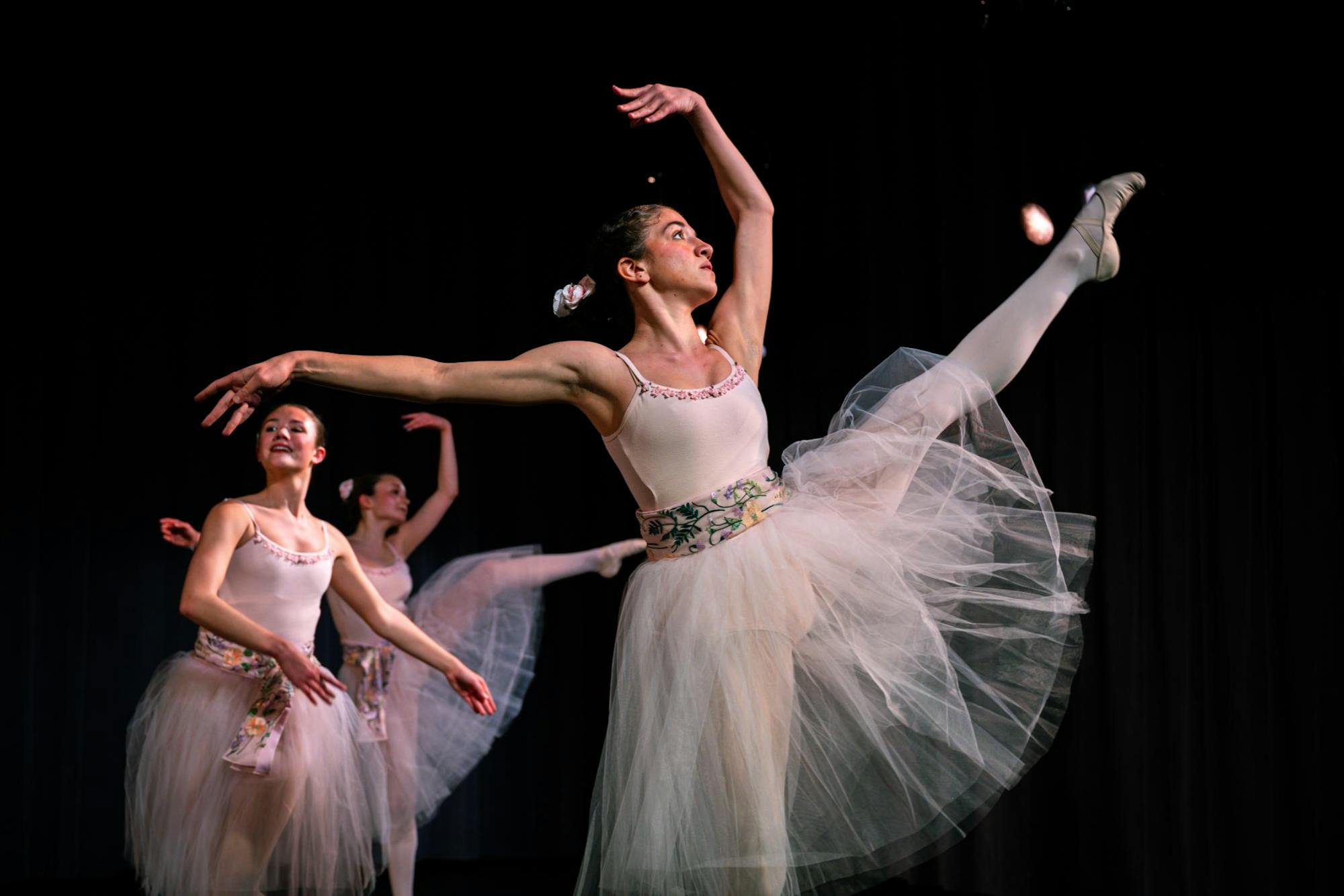
Now, Gilmore said that during his time at Cornell, he has seen one theatre performance and one dance performance a year, although Levitt said that those numbers vary.
Hu said that one of the most surprising findings was “the sheer impact that two million dollars can [have].”
Gilmore is a rising junior, majoring in PMA. He said the department remains severely under-resourced and unable to hire additional technical staff, forcing staff members to oversee both props and scenic duties — positions that would usually be held by separate members.
“The question is: where do we want our students to be at the end of their four years? They used to be in a different place. They can’t get to that place for the most part now simply because of the limited resources,” Levitt said.
Nexus Scholars’ Presentation to Dean Loewen
After a summer of researching, Hu and Buskirk presented their findings to students, professors and Dean Loewen on July 29, appealing for greater funding towards the arts.
Burskirk described it as a positive experience, but he “didn’t know if [Dean Loewen] was the most receptive.”
In response to questions about the Nexus scholars’ findings and funding for the PMA department, Dean Loewen explained the College of Arts and Sciences’ current support for the PMA department.
“We approved a new hire in the department this year—one of a small number of new hires across the College—and we are funding a new program in Los Angeles for students that will open all kinds of creative opportunities and access to the arts in a global cultural center. In recent years, the College also took on fully funding Cornell Cinema, which now falls under PMA’s umbrella,” Loewen wrote to The Sun.
Buskirk, Hu and Gilmore agreed that PMA should have a bigger presence on campus and encouraged students, faculty and the administration to support the arts more whether that be by attending performances or increasing funding.
“Coming to shows, showing up to support student film screenings is, I think, the biggest way we can try and make an impact right here, right now,” Buskirk said.
Importance of the Arts
Cornell’s theatre history dates back to 1880 when the arts started as student-led organizations. The Cornell Dramatic Club was recorded to be the University’s first organization to admit both men and women equally in 1925.
From 1988-2011, Cornell’s performing arts department experienced the peak of its success, as it was a top funding priority under President Frank Rhodes, producing Broadway and Hollywood actors, along with Pulitzer Prize winners, and drawing in audiences of 15,000 people a year, according to Nexus Scholars’ research.
Not only did PMA bring together the Ithaca community, but it was also a driver of local business, according to the Nexus Scholars’ research. Before and after performances, people would go to the bars and restaurants in Collegetown, stimulating local businesses. Levitt said he knew of places that were forced to close after the department downsized.
Levitt looked at today’s political divisiveness and threat of AI taking over the arts, and said that “the only antidote to this is liveliness.”
With AI generating scripts and replicating actors on screen, live performance remains a distinctly human medium, preserving the emotional connections, community-building and live presence that AI cannot replace.
He said that the arts also teach empathy and humanity. Levitt referenced his work as a facilitator for the Phoenix Players Theatre Group, where incarcerated people combine theatre with inner healing to reconnect with their humanity.
“I know what the power of the arts is. I've seen [incarcerated people] go from complete mental decline, deprivation, to being able to use their minds in a way for the first time that they never knew they could,” Levitt said.
Gilmore agreed with Levitt.
“Art is something that is inherently human. And when we ignore it, we ignore a part of ourselves that is essential,” Gilmore said.

Sophia Riley Sim is a member of the Class of 2028 in the Brooks School of Public Policy. She is a senior writer in the news department and a staff photographer. She can be reached at ssim@cornellsun.com.