

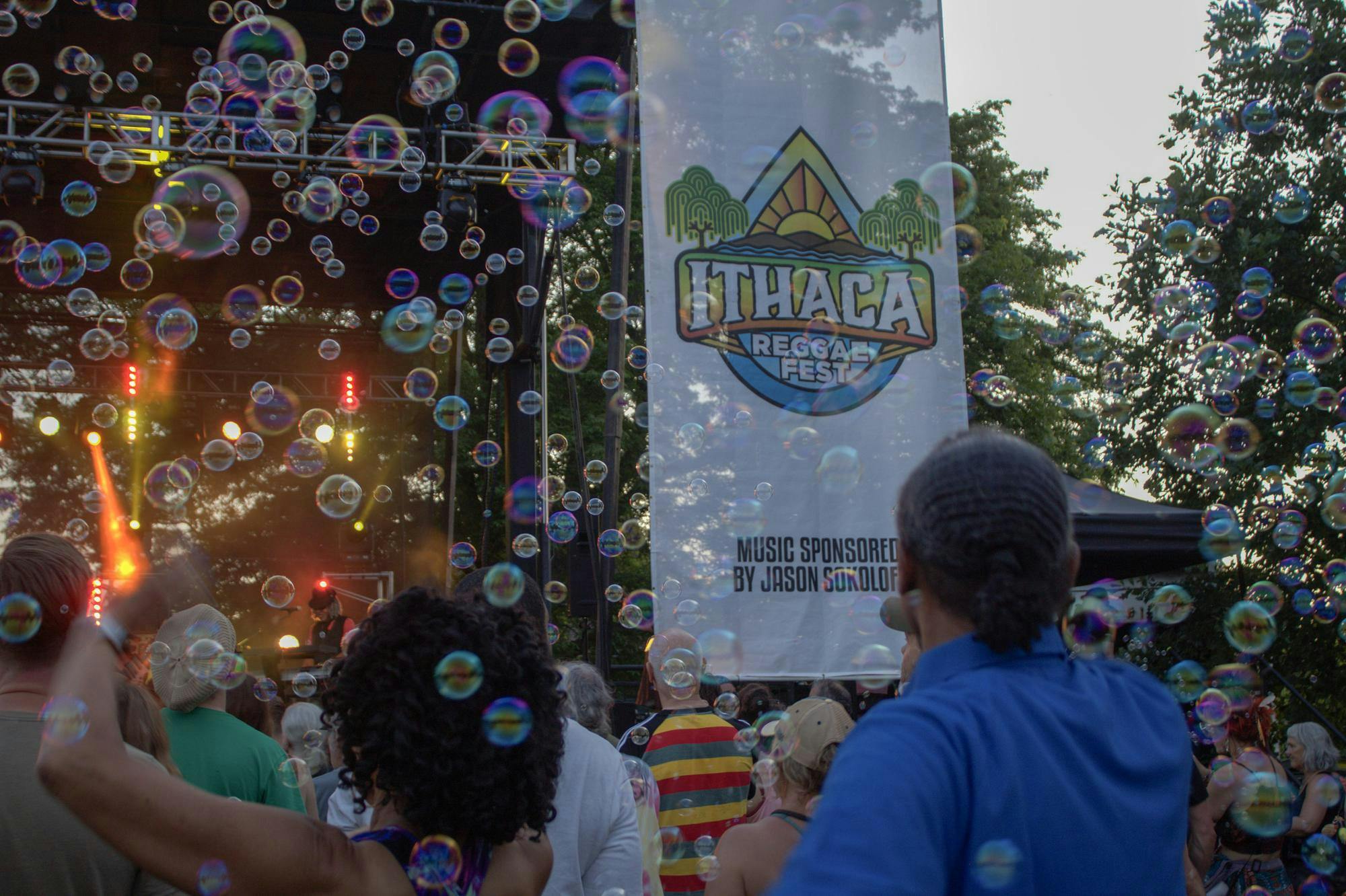
Ithaca’s eighth annual Reggae Festival brought the community together for a weekend of live music, community-building and a message about the importance of protecting our natural areas.
Artists hailed from around the world — including Jamaica, the birthplace of reggae. The lineup included nine-time Grammy nominated band Third World, who toured with legends Stevie Wonder and Bob Marley, and percussionist Larry MacDonald, who just celebrated his 89th birthday.
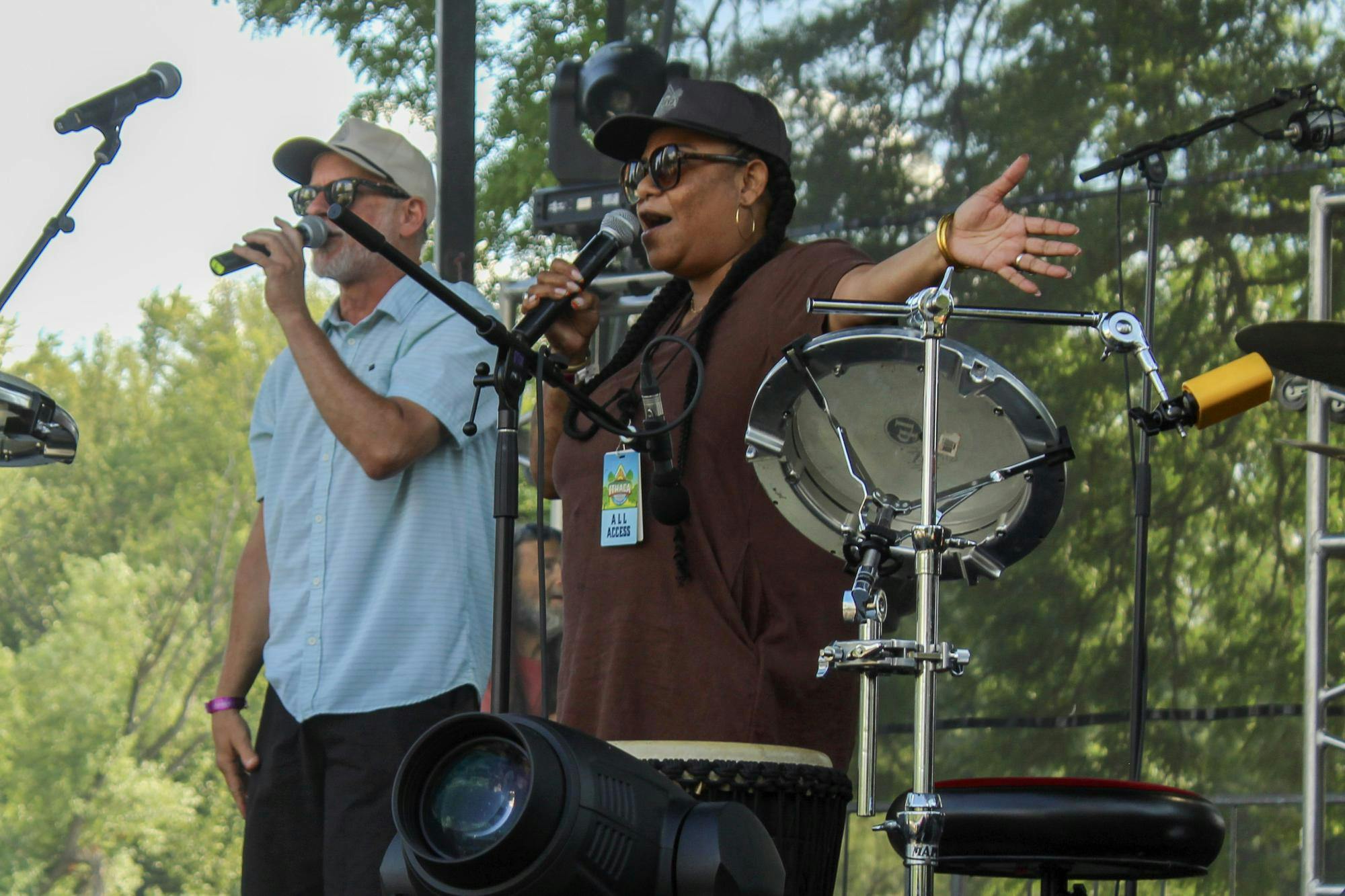
In between bands, Anna Goldsmith, co-MC and founding director of the festival, spoke to the audience about the importance of protecting Cayuga Lake and fighting back against plans for an AI data center.
“Part of our event here is to really bring attention to being water protectors to our Cayuga Lake, to what it means to be sustainable, not use plastic, what it means to be in [a] community where there’s no division,” Goldsmith told The Sun.
The event drew around 3,000 people, according to Russ Friedel, a festival director.
Against the cheerful musical backdrop, the entire festival bled through with deeper anti-establishment and anti-prejudice themes. Community members set up tables advocating against the data center, criticizing the current administration, promoting sustainability and raising money for people in need.
The songs performed at the festival also echoed messages of resistance and universal love, stressing the importance of community, education and supporting youth.
“Reggae music is music [with] a message,” Goldsmith said.
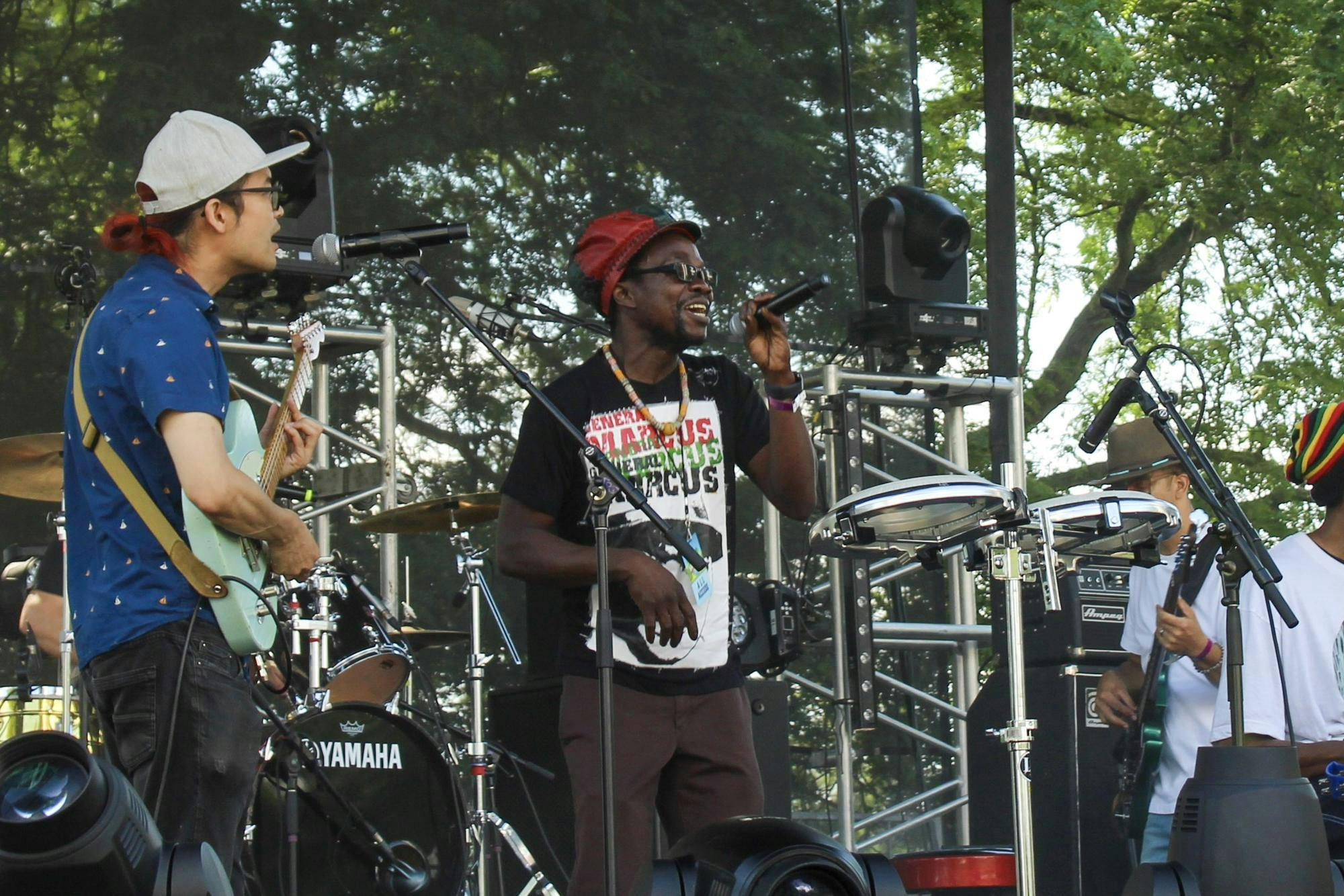
ChaCha, the lead singer of the band Mosaic Foundation, also emphasized the significance of reggae music beyond smooth tunes.
“Reggae music is the voice of the voiceless,” he said. “It’s the voice of the people.”
ChaCha, originally from Ghana, criticized how people often dismiss reggae music and artists.
“Anytime you play reggae, [people say,] ‘Oh, he smokes marijuana, reggae and marijuana,’ but not all reggae singers smoke marijuana,” he said.
Ten years ago, ChaCha founded his own non-profit, called NDOR Eco Village, which now collaborates with the Cornell Lab of Ornithology in promoting bird conservation, education and sustainable agriculture in Ghana.
He said the drug use associated with the genre has been used to suppress the community’s voice and the “social outcry” present in the lyrics.
“Reggae was banned for some time, but guess what? You can’t hide the truth — what they were singing about … the corruption in high and low places making the people in the countryside suffer — nobody wants to talk about this stuff,” ChaCha said.
Jamaica has a history of banning reggae records from the radios. The genre, which emerged from poor communities, spoke out against oppression and prejudice and promoted Black cultural resistance and pan-Africanism. Continuously associated with protest, reggae has also faced international censorship for its provoking lyrics.
Audience members also noted the power of reggae’s lyrics and message.
Pamela Alvarez, who drove up from Westchester, New York with three kids to see the festival for the second year in a row, spoke about the message behind reggae.
“They say ‘one love,’ but it’s true,” she said. “We’re all just a big network of humans and we should love each other like one, and that’s what I love about it. It’s almost religious to me.”
Akil Atiba tabled for Starlight Jamaica to help raise money for a Jamaican parish affected by Hurricane Melissa. He said that to him, reggae is all about “peace and understanding.”
Goldsmith said that she started the reggae festival ten years ago with a group of about ten people who wanted to spread their “love for reggae music.” Although there was a two-year hiatus for the COVID-19 pandemic, the festival just celebrated its eighth successful year.
Goldsmith emphasized the importance of creating spaces, like this festival, where people can come together and connect in the face of rising technology.
“More and more as society turns to social media and AI, [I see] the social disconnect amongst young people,” she said. “It’s really important for me to be able to have events like this where people are socializing and they’re talking to one another.”
Curt Bayer, who worked at the Finger Lakes Grassroots Festival for 30 years, spoke about his love for music and encouraged people to get out there, expose themselves to new genres and let themselves “grow musically.”
“The best experience I know is either playing music or hearing music or dancing to music,” he said. “There’s nothing like it in my life that compares.”
Goldsmith appealed to the crowd that the proposed TeraWulf data center will move forward quickly if action is not taken soon.
“As of now the data center is going up in Lansing, and it will forever be a hum,” she said. “We will never have silence.”
She referred people to Cayuga Lake Watershed Network to learn about ways to get involved.
“It is important that we come together, and that we see each other, and that we take care of one another, and that we see our commonalities more than our divisions, and that we stay vigilant in protecting this lake and what this reggae festival stands for,” she said.
Kate Turk is a member of the Class of 2027 in the College of Arts and Sciences. She is the assistant managing editor of the 144th board and was an assistant news editor for the 143rd Editorial Board. She can be reached at kturk@cornellsun.com.


