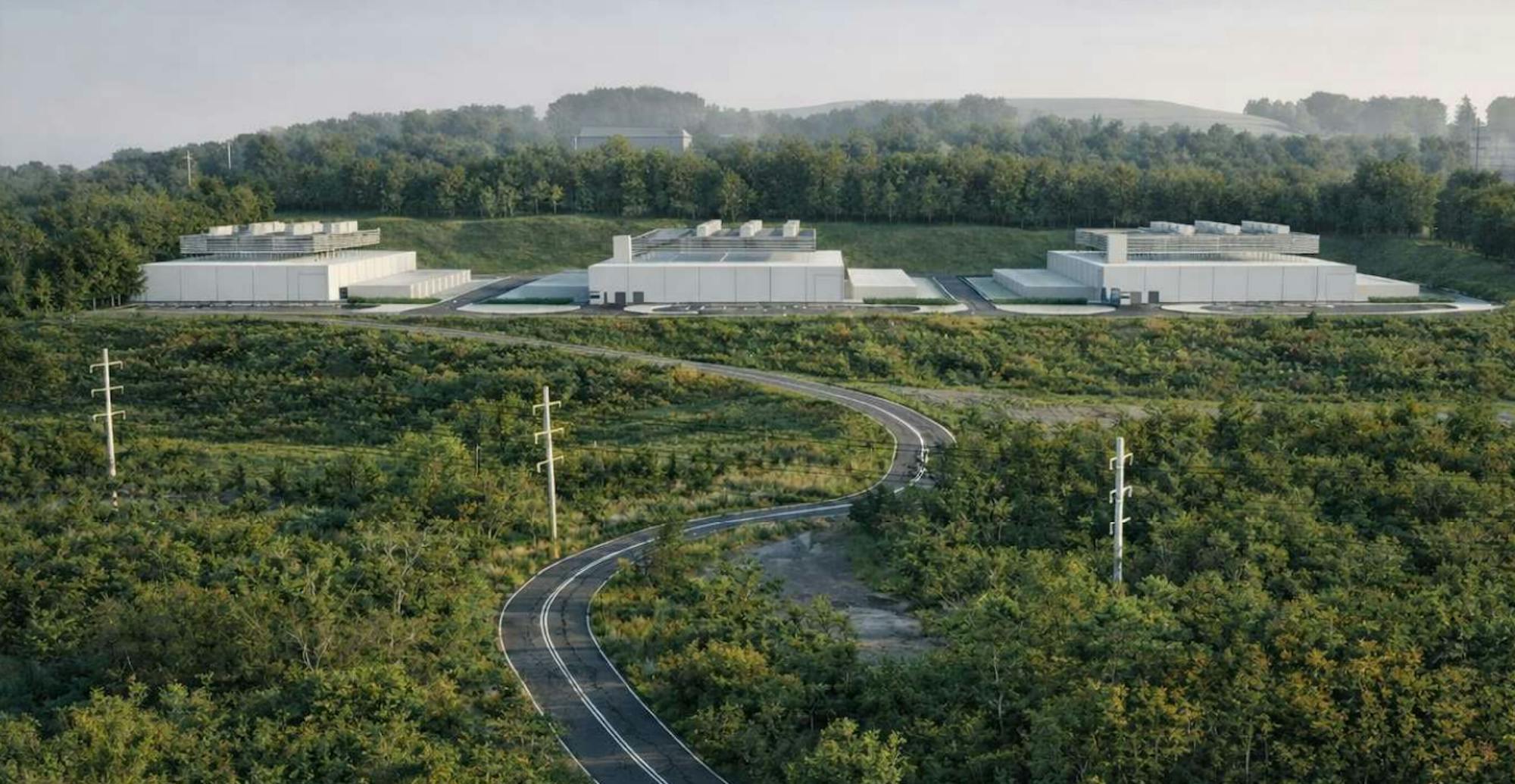
The Town of Lansing Planning Board held their monthly public town meeting Monday night to review the proposed TeraWulf data center project, raising concerns about drawing water from Cayuga Lake and potential impacts from construction.
The proposed Cayuga Data Campus, operated by TeraWulf, is a 438-acre, three-center planned project expected to process, hold and share data for companies such as Alphabet, Inc. with operations expected to begin in 2026, according to TeraWulf.
At the meeting, Scott Kobylarz, a TeraWulf representative, presented an overview of the data center site plans. The presentation showed mock-ups of the data campus at the old Milliken Station power plant site. The planning board will share their recommendations with the town after they receive more information from TeraWulf.
Public comments will not be heard until there is a final application, but written comments will be accepted on the town website. There is not a clear time line for the application, but the typical data center permitting process takes six to 24 months.
The New York State Legislature proposed a three year moratorium on data center approvals in February, which is currently in committee.
No Data Center FLX, an anti-data center organization, protested the construction of the center outside the Lansing Town Hall, where the meeting was being held. The organization asked people to wear red, meaning “stop,” to protest the development. People's red shirts can be seen in the meeting’s livestream.
According to the organization’s website, “technological progress that isn’t sustainable isn’t really progress. It’s borrowing from and jeopardizing our future.” No Data Center FLX is advocating for a public comment hearing, as the current meeting did not allow for comments from residents.
“We thought the TeraWulf representative Scott [Kobylarz] was extremely unprepared for that to be their site plan review meeting and support the town’s decision that their application was not complete,” No Data Center FLX wrote in a statement to The Sun after the meeting.
One protester was asked to leave the meeting by board member Dean Shea, when they entered the building with a “NO DATA CENTER, SAVE OUR LAKE + NYSEG BILLS” sign and a dog they identified as a service animal. Shea opened the meeting saying animals and signs are not permitted in the town hall, reminding attendees of board member John Licitra’s earlier comment that “political theater can be outside.”
The TeraWulf development will include three centers in Phase 1, with plans to add one or two more to the campus in Phase 2. There will also be a solar farm on the site, operated by Cayuga Solar.
During the meeting, Kobylarz addressed the news that Cayuga Operating Company — the landowner TeraWulf is leasing the site from — was approved to draw up to 1 million gallons of water a day from Cayuga Lake, enough to supply about 3,000 single family homes annually.
A board member sought further clarification about how the water drawn from Cayuga Lake would be used.
John Mirabella, the construction manager at the TeraWulf-operated Somerset Data Center, near Buffalo, said that the Cayuga Lake water will only be used for dust management and power washing.
The water will only be used on the site “for maintenance activity at the old site and for the landfill, not for the data center,” Mirabella said. Kobylarz added that “any water used [for the data center] will come from Bolton Point,” a public water system in Ithaca that pumps water from Cayuga Lake, providing about 30,000 consumers with drinking water.
“It was infuriating that no one on the planning board brought up the fact that Bolton Point intakes water from Cayuga Lake,” No Data Center FLX wrote to The Sun. “It seems like a sneaky and dishonest work-around for TeraWulf to use Cayuga Lake water.”
Board members then raised concerns regarding the noise the project may produce, as well as increased traffic to the site, as Terawulf plans to hire 500 construction workers, according to their presentation at the meeting.
“You're gonna be blasting [bedrock] and excavating and clear cutting, and so, I’d be curious, what are you looking at on a cost for Phase 1 and a cost for Phase 2?” asked Al Fiorille, a planning board member, during the meeting.
Kobylarz responded that he intends to share these details with the board later. The materials will be posted on the town website once they are received.
“We anticipate the impacts will be irrevocable change to the 43 acres they plan to clear cut,” No Data Center FLX wrote.
After some discussion, the board concluded that there is not enough information at this time to make a formal recommendation to the town based on these concerns. They will wait until TeraWulf has a more complete application and has shared the additional materials that answer the planning board’s questions.
An escrow account was set up, paid by TeraWulf, to cover the costs of consultants on the project. TeraWulf set aside an additional $4,000 to pay for the time of the planning board, zoning board and the clerk’s office spent processing documents for this project.
“I bet you the town spent $50,000 already. Why are the taxpayers paying this, not the data center?” Fiorille asked. Wetmore said that “the data center has been very expensive to the town, without question,” but clarified that it is too complicated with so many actors involved to accurately bill the cost of review.
In terms of looking for public input, Shea said the planning board will not be accepting comments until there is a completed application.
“Comments like, ‘I don’t like data centers,’ are not particularly helpful,” he said, while “specific concerns” are very helpful for the board.
Public town meetings are held on the third Wednesday each month at 6:30 p.m. at the Lansing Town Hall.
Lila Davis is a member of the Class of 2029 in the College of Agriculture and Life Sciences. She is a staff writer for the news department and can be reached at ldavis@cornellsun.com.