


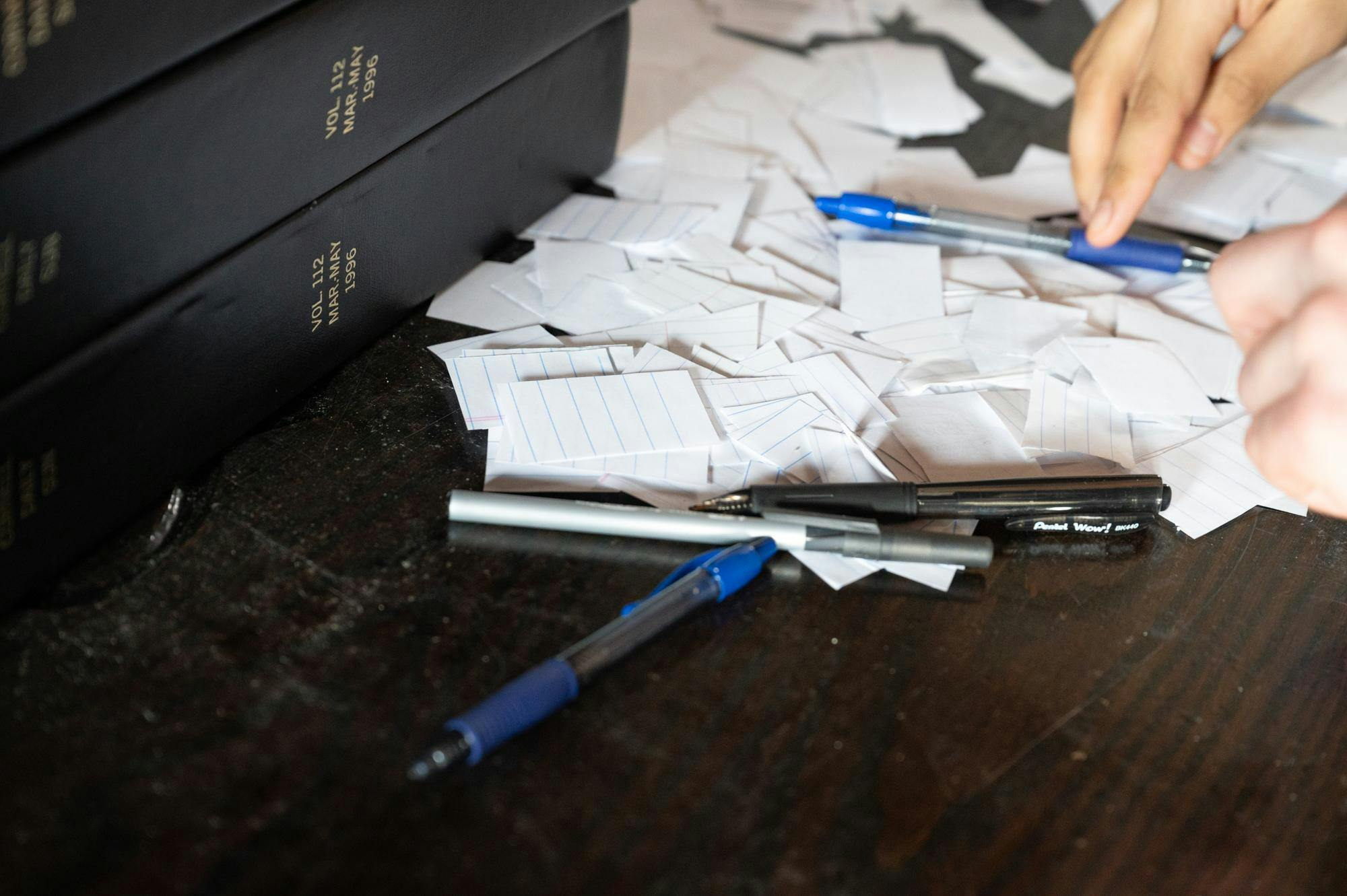
On Saturday, in the second-floor ballroom of the brick-and-mortar heart of our downtown Ithaca office, The Sun gathered to elect its 144th Editorial Board. Hours and hours of deliberation ensued as the next generation of editors, for a paper that has remained unwaveringly independent since 1880, were elected by their peers.
In the transition of power, it is often easy to focus on the roles we begin to occupy: the editors, the writers, the photographers. But the most vital role in our community is the one you occupy. The Sun is indeed a vehicle of power, but it is one held accountable by you, our readers.
It is tempting to describe The Sun as a watchdog. That is part of our role. We are a check on the positions of power within our community: on assemblies, on administrators, on council members. When decisions are made, you can count on The Sun to be there. When words begin to obscure more than they reveal, you can count on The Sun to clarify them. When power operates within the shadowy corners of our campus, you can count on The Sun to shed light.
But we know that accountability alone is not enough.
The greater threat facing our University is not simply hostility to the press, for the check of power will always remain an irritant to those in its spotlight. Rather, the much quieter, much more dangerous threat is the dimming — the apathy, the slow erosion of rigor and intellectual curiosity that should light a flame in every single one of us, for it certainly blazes bright within The Sun. It’s the very idea that passion is embarrassing, that depth is tedious, that precision is optional so long as a take is quick and loud. The big threat is not censorship, not hostility, but surrender to the darkness of mediocrity that dims us. The Sun burns to resist that dimming.
To report with The Sun is to fight against the gravity of the easy answer and the dimming of discourse.
To report with The Sun is to enjoy the slow, to ‘embrace the suck,’ to sit through meetings that run too long, to read through documents that are dense, often deliberately so, to talk to people who disagree with each other — and often with us.
But the reward for that tedium is beautiful. The reward is respect, accountability and, most importantly, representation. When reporting is done well, it affirms the terms on which our shared life on campus is organized. It reminds us that our administrators’ authority is not self-justifying, that our student leaders possess positions out of trust, not title, that our institutions belong to the people who inhabit them, that they belong to us.
The Sun is no narrator, nor is it frictionless affirmation, nor is it outrage on demand. The Sun is an archive. The Sun is our community’s record of itself.
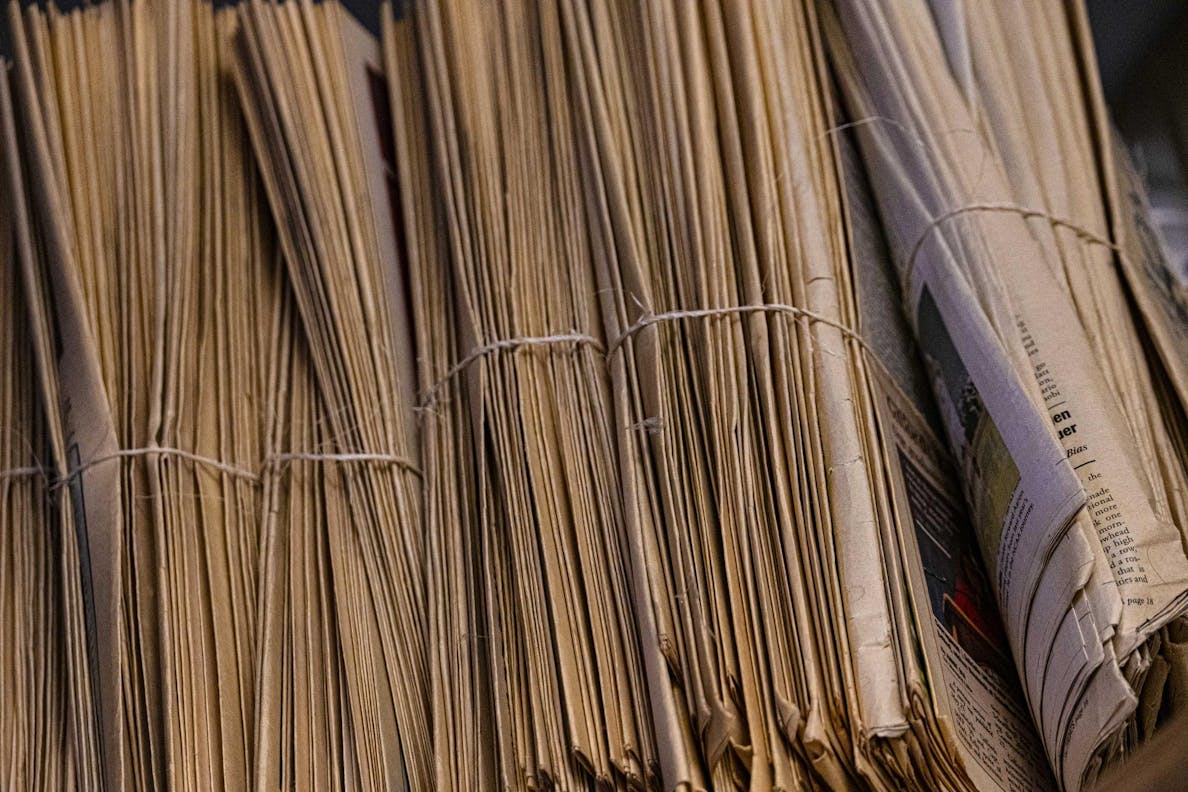
We have seen how easily that record can be tampered with or erased: since January 2025, the federal government has removed over 8,000 web pages across multiple agencies from the Department of Justice to the Centers for Disease Control and Prevention, as if history — as if truth — has become a fragile, fickle thing. When archives are not held in the hands of the people, they become negotiable, and even worse, they become contingent on whoever happens to be in power.
But when these records are removed, when voices are silenced, The Sun rises as it transforms into the people’s archive and the future’s textbook. We write not to find a story, but to document how that story should be understood by history. We write the future’s reactions, its beliefs, its warnings.
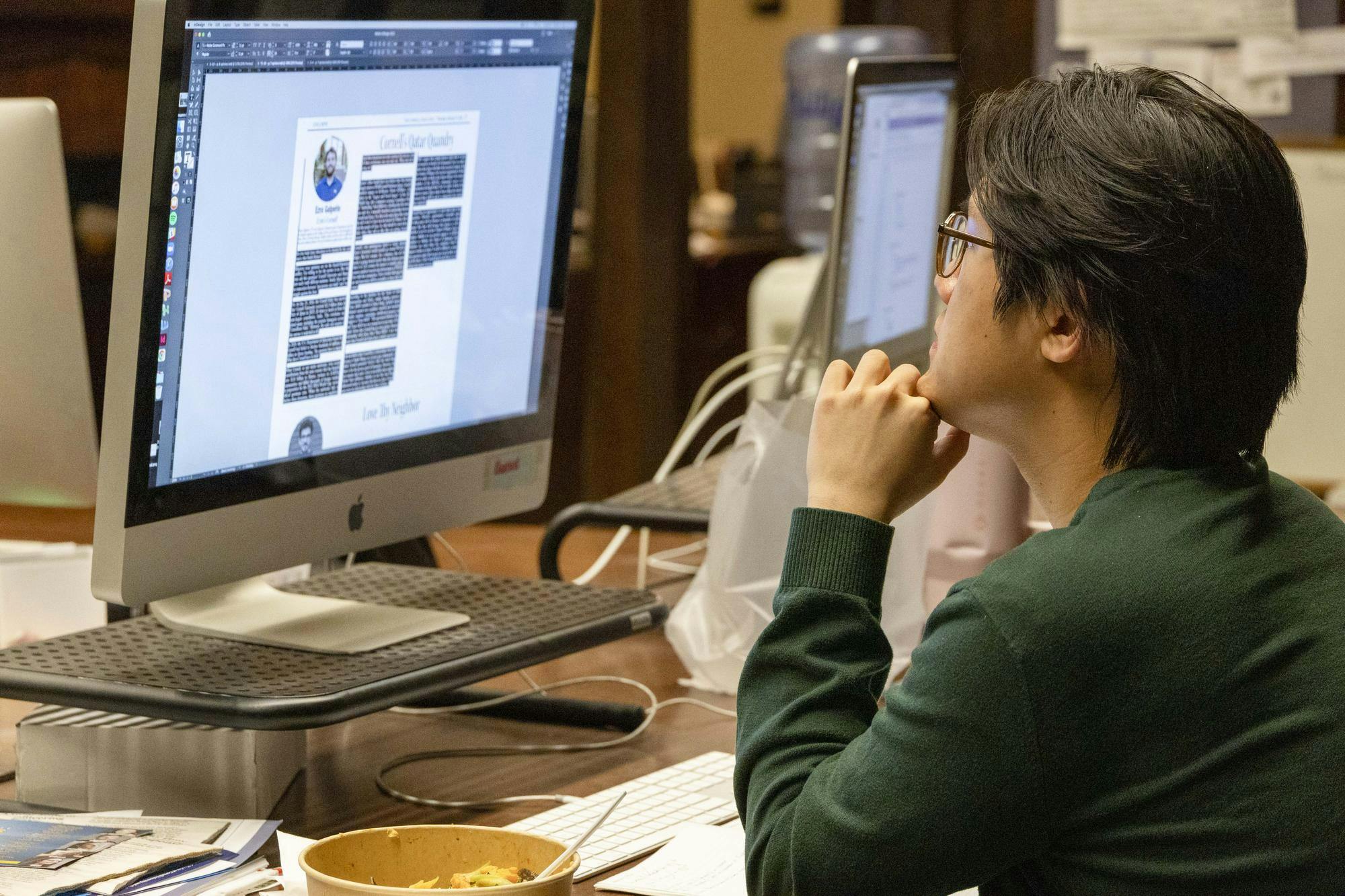
Whether it is our multimedia teams capturing our community through lenses and sketchbooks, our news writers typing furiously into the late hours at The Temple of Zeus as they uncover the truth we all deserve to know, our opinion columnists digging into the corners of Cornell where nuance lives and require articulation, our science writers translating the research shaping our world into language that belongs to all of us, our sports writers humanizing the points on the scoreboard or our lifestyle and arts writers acting as the diaries of our student body, we capture the zeitgeist of our era before it evaporates.
So we will be bold. We will be bright. And we will be yours.
Our readers have the most vital part to play in building this record. Contact us with tips to ensure that we are covering the stories that matter. Email us corrections if we get it wrong. Join the conversation by submitting letters to the editor and guest columns. And never forget: the 144th Editorial Board answers to nobody but you, and we intend to keep that promise every day we rise.
And so long as The Sun continues to rise, we will refuse to be dimmed.
— S.D.
Signal/Cell: +1.321.203.6550

Sophia Dasser '28 is a member of the Class of 2028 in the College of Arts and Scienes. She is the editor in chief of the 144th Editorial Board and was the opinion editor for the 143rd Editorial Board. Her column Dass(er) The Point explores the intersection of technology, ethics and social justice, with a focus on the overlooked and underrepresented. She can be reached at sdasser@cornellsun.com or at 321-203-6550.


