



If senior defenseman Jack O’Brien’s final week at Cornell is anything like his first week, he wants no part of it.
“It was kind of a nightmare,” he said.
Now on the tail end of his fourth season with the Red and donning an ‘A’ on his sweater, O’Brien recalls that first week with a smile. In the years since, there have been happier memories, moments of laughter and a couple of championships, too.
But he remembers that first week like it was yesterday: sleeping through his very first workout.
“I woke up, looked up my phone, and it said, ‘timer done,’ and it wasn't making any noise,” O’Brien said. “It was 6:20. I had to be at the rink at 6:15.”
Stuck in a triple with two random students, O’Brien didn’t yet have teammates nearby to wake him. So with the little knowledge of campus he had, O’Brien jolted out of bed and ran from North Campus down to Lynah Rink — over a mile.
“All the boys were in the gym already, so I put on whatever [clothes] I could find, and I run in there,” O’Brien said. “And I'm wearing a grey shirt. Everybody else is wearing red shirts, so I stuck out like a sore thumb.”
Late and not in the required team attire at the Friedman Strength and Conditioning Center, O’Brien was “politely” asked to leave the lift by coach Tom Howley.
“I'm standing in the hallway, like, tears in my eyes,” O’Brien said. “I screwed up big time.”
Then-head coach Mike Schafer ’86 spoke with a forlorn O’Brien, and assistant strength and conditioning coach Mike Missen led O’Brien through an extra workout that eventually allowed him to rejoin the team for the remainder of the lift.
The next morning brought an even more important lesson.
“Then I told my mom about that,” O’Brien said. “So the next morning, she was up at three in the morning Pacific Time, calling me, making sure that I'm awake and she's freaking out [because] I'm not answering.”
Don’t be fooled — O’Brien didn’t sleep through another workout.
“Because we didn't have to be up early that day,” O’Brien said with a grin. Early morning workouts were just for Monday and Wednesday mornings, not Thursdays, when O’Brien’s mother, Deena, phoned him from British Columbia. “I had, like, 10 missed calls from her, and I didn't hear from her until noon.”
It’s been over three years since that fateful week for O’Brien, who is seemingly a different person today. His steady presence on the Red’s blueline this season has been vital for a youthful Cornell squad — his leadership, though, is even more valuable.
“You’ve got to be pretty mentally tough, and you’ve got to be driven, and you’ve got to love where you're at,” said head coach Casey Jones ’90. “That would probably tell you about Jack. [He] loves Cornell, loves his teammates. [He] fought tooth and nail to earn what he's getting.”
Because ever since that first missed workout, O’Brien started working, and he never stopped. He dressed for four games as a freshman, nine as a sophomore, 30 as a junior, before dressing — and racking up significant minutes — in every game so far as a senior in 2025-2026.
“It comes down to really establishing your role and buying into it and believing in it whatever that may be, whether you’re [on the] first line or in the stands every night,” O’Brien said. “If you can master your role, then you actually do contribute to the team every day.”
***
O'BRIEN REMEMBERS his very first collegiate shift.
“I remember jumping over the boards, and I felt like I was playing the NHL video game,” O’Brien said with a laugh. “It’s like the “Be a Pro” mode, and then you jump over the boards, and all of a sudden, now the camera changes, and you're in the game.”
At that point — Feb. 4, 2023 — O’Brien was just 19 years old, playing college hockey at one of the premier powerhouses of the northeast.
“I was playing with men. I was 19, and some guys on the team were 24,” O’Brien said. “It was like, ‘Oh, wow, you really got to grow up here.’ It’s different than junior [hockey].”
O’Brien — who hails from White Rock, British Columbia, a coastal city just south of downtown Vancouver — played three years of junior hockey before arriving at Cornell. Like most aspiring hockey players from western Canada, O’Brien dreamt of playing in the Western Hockey League — not the British Columbia Hockey League, where he wound up.
“My ninth-grade year is the WHL draft. I played on the Tier-I team for Delta [Hockey Academy] in a pretty good league with some good players, and didn't get drafted in WHL,” O’Brien said. “And I wasn't really expecting to get drafted, but after that, I was like, ‘Alright, screw the ‘Dub.’ Let's go the school route.”
The BCHL — which funnels hundreds of players to college hockey each year due to its amateur standing —- seemed like the next best option. O’Brien went to his first BCHL camp with the Nanaimo Clippers the summer before his grade 10 year.
“After I didn't get selected, I felt there were some players that got selected that I was better than,” O’Brien said. “So it kind of motivated me to stick it to them and see if I can find my way elsewhere.”
That’s not the first instance of O’Brien’s chip-on-the-shoulder mentality that he’s harnessed during his time at Cornell. It could even be traced back to his early days in White Rock, when his mom — who played the sport, along with O’Brien’s uncle and grandfather — put her son on skates.
“I started skating when I was four, and I hated it,” O’Brien said. “Cried every time I went on the ice. And then when I was six, I told my mom I wanted to play hockey. So she told me I had to get over the fear of skating. So I started learning how to skate, and at six, started playing hockey. I got over it.”
O’Brien — who currently has 26 blocked shots on the year — was a defenseman from the day he started playing. His motives were always clear — not letting the other team score.
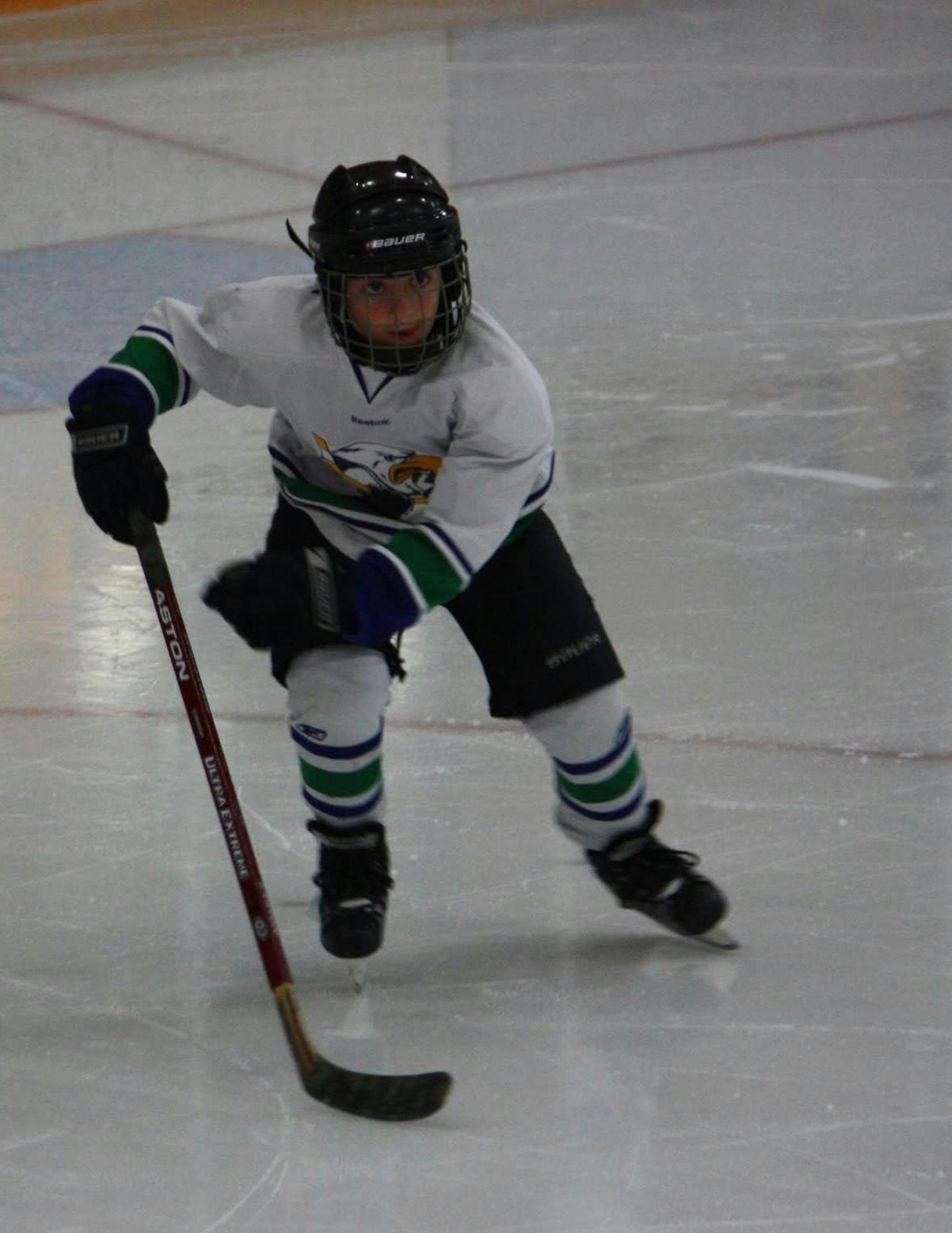
“I always like to think I'm pretty good friends with the goalies on every team I'm on, so that's what I always do, is keep the puck out of my net,” O’Brien said.
That’s what O’Brien wanted to do when he arrived at Cornell — keep the puck out of his net. But his freshman year overlapped with the senior seasons of future NHL defensemen Sam Malinski '23 and Travis Mitchell '23, so that time was hard to come by.
As a sophomore, O’Brien came in eager to make a bigger impact — those seniors had graduated, and that 2023-2024 team was poised to be one of the younger ones in college hockey.
But he found himself in a similar place — on the bench or in the stands.
“You really want to take that next step and seize an opportunity,” O’Brien said. “Unfortunately for me, it didn't really work out. My sophomore year, I was sidelined pretty good.”
That was the year, O’Brien said, where he cracked the code to college athletics — no matter what, everyone has a role. Stick to it.
“You're out there trying to make guys better,” O’Brien said. “You're trying to get yourself better on the ice, but down the stretch, you're not going to play in the playoffs. But you better be good on the mock power play and the mock penalty kill, and really set the guys who are playing up for success.”
***
GROWING UP, O’Brien’s favorite player was Bo Horvat.
“Which is weird,” O’Brien said, “because he's a centerman. But I love him. I got a couple of his jerseys.”
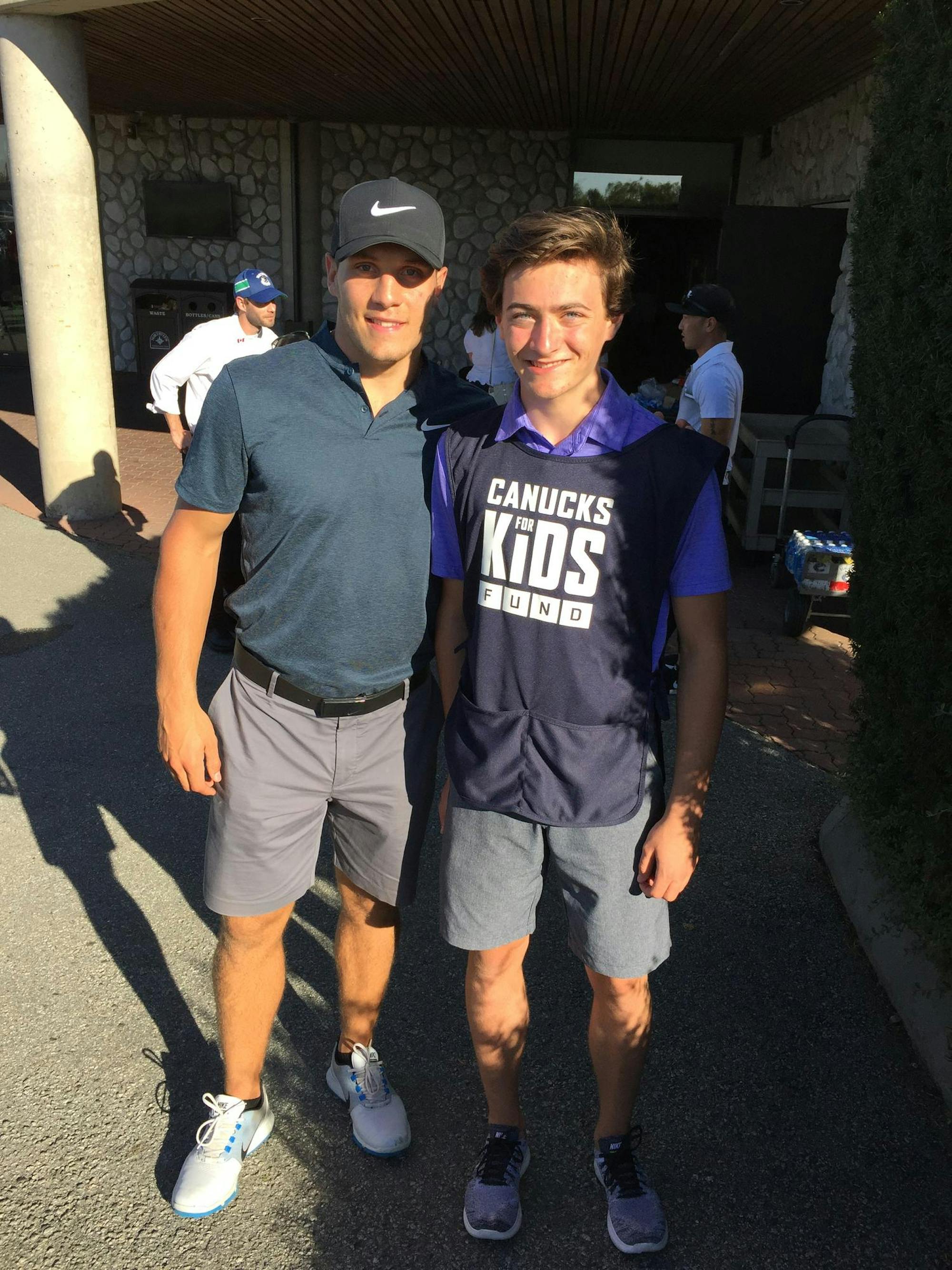
O’Brien recalls watching Horvat and the rest of the Vancouver Canucks — his favorite NHL team to this day — religiously at home. Every now and then, O’Brien and his family would get to a game, but nights watching Canucks on TV were embedded into his childhood and hockey journey.
Perhaps it was those years glued to the television set that aided O’Brien to success in a position he never could have predicted he’d find himself in.
Enter the 2024-2025 season.
“Now I'm a junior. Now I'm an upperclassman,” O’Brien said. “That's when I kind of learned [that] you just got to find a way.”
O’Brien knew his role. Or, at least he thought he did.
“I was the seventh defenseman. So how do I be the best seventh defenseman?” O’Brien said. “Learn how to play forward.”
O’Brien suited up for 30 games as a junior, but largely in a position he’d never played at any level of hockey. He filled in briefly as a forward against North Dakota in last year’s season-opening weekend, and after that, the coaches called O’Brien into their offices, expressing their need for a permanent left-winger as injuries continued to pile up.
Not much later, on a line with then-sophomore forward Tyler Catalano and Kyler Kovich ’25 against Harvard, O’Brien earned an assist — his first collegiate point.
O’Brien’s stint at forward wasn’t just an experiment — it was compulsory. Two of Cornell’s forwards were dealt season-ending injuries in the first practices of the year, weeks before games got underway. Then-captain Kyle Penney ’25 got hurt and missed months of action. At one point in February, Cornell had just eight forwards available for a game. A typical lineup has 12 or 13.
Those games were where Jones — then an associate coach and head coach in waiting — really got to know O’Brien.
“He fought through it, and the positivity he brought when he wasn't playing — I hadn't seen that in my 30 years in coaching,” Jones said. “His emotional connection on the bench last year for me was off the charts. It was like he was another coach down there. He'd have the pre-scout.”
For other stay-at-home, defensive defensemen, the thought of playing forward might be enough to crinkle their noses and create an attitude of contempt. Not for O’Brien.
“It was definitely a change,” O’Brien said. “But for me, it was a chance, and I took it. I ran with it.”
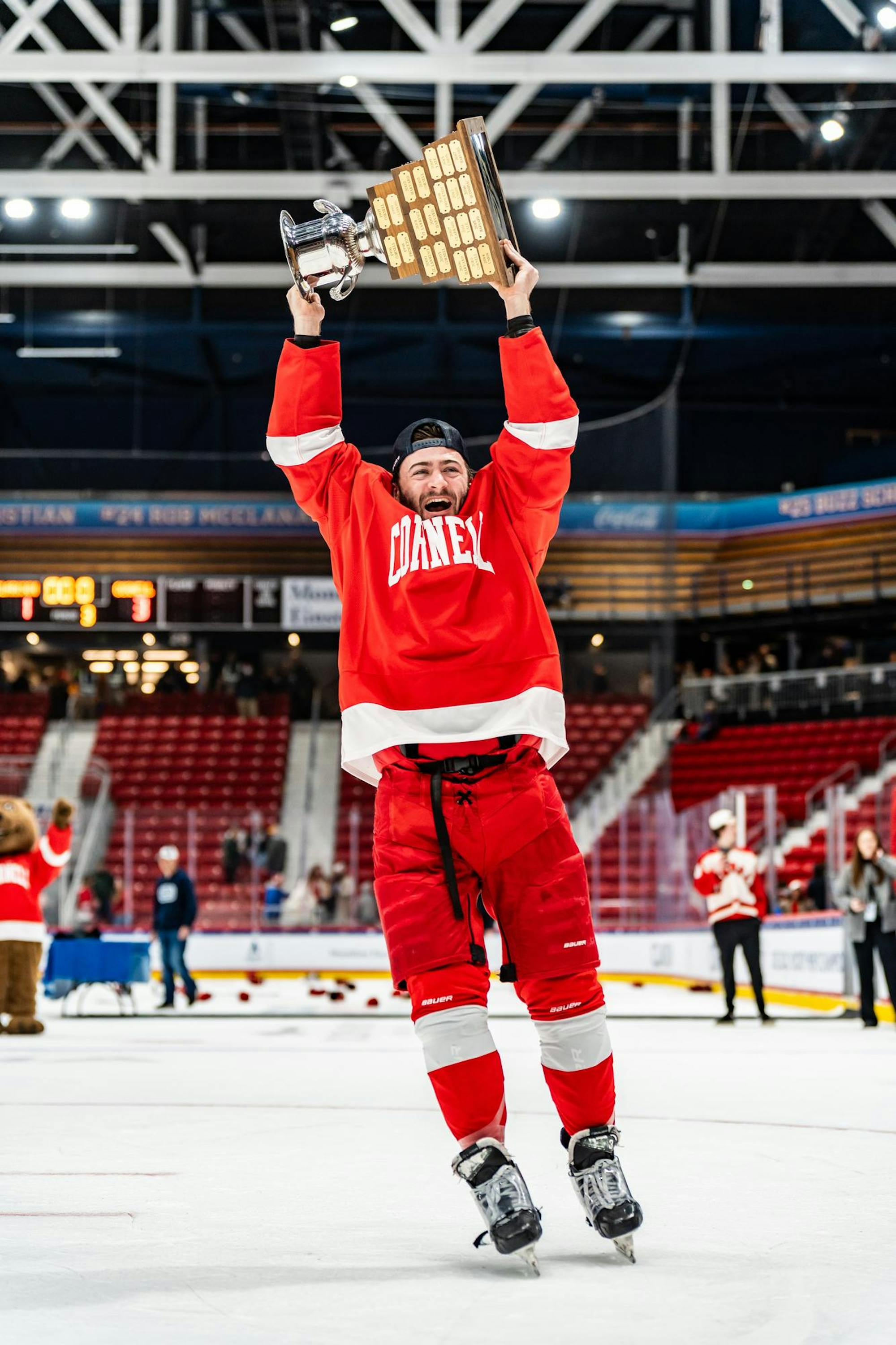
O’Brien played out of position for almost the entire year. When players began slotting back into the lineup come playoff time, O’Brien ice time then dwindled. He eventually bore witness to one of the most courageous postseason runs in Cornell program history, as the team went from the sixth seed in the ECAC to hoisting the Whitelaw Cup and, eventually, falling one goal short of the Frozen Four.
That 2025 ECAC championship — that’s the moment O’Brien will never forget. He’d played one “stressful” shift in overtime in the semifinal upset of Quinnipiac, but he didn’t play a second in the championship game.
It didn’t matter one bit.
“I just got the best seats in the house to watch us beat Clarkson in the finals,” O’Brien said. “Even though I didn't get over the boards, I remember calling my mom after and just crying my eyes out. That was probably the best day of my time here at Cornell. I didn't even get on the ice, but it felt like I was a part of it. I helped us achieve that.”
***
HEADING INTO O’Brien’s senior season, there were no guarantees. In fact, there was a lot in the way between O’Brien and a regular role on the blueline — his summer internship.
“I was in San Francisco for eight weeks by myself, working an internship by myself,” O’Brien said of his internship with The Bay Club Company. “And I was like, “Hey, if I'm going to be out here for my whole summer, I might as well do something. So I wasn't able to skate, but I was able to work out. So I devoted my whole summer training to that, and it paid off.”
Lifting weights and conditioning were O’Brien’s focuses. There is lots of talk about college hockey players who go off to play professional hockey — but for many, that’s not a viable option.
“Over the years, I’ve just been really mastering the discipline in the offseason, because everyone's offseason is different,” O’Brien said. “Some guys are skating every day. … You’re balancing that, trying to set yourself up for life after school and hockey as well [and] getting yourself ready for the season.”
His hard work did, in fact, pay off. At the start of the year, O’Brien was named to the Big Red Power Wall of Honor, a list of student-athletes who excel in the weight room. Only three players on the men’s hockey team are named to the wall, something O’Brien was striving for “since the day [he] got here.”
“He got that opportunity started the year with where it was at, and he was ready. He didn't miss that opportunity,” Jones said. “Sometimes, if you don't continue to work hard and your opportunity presents it, and you're not ready, it's hard. He's just stayed the course and had a great offseason, so he put himself in a great spot.”
“I thought I'd come this far after three years, and I was like, ‘What the hell? Might as well go for it,’” O’Brien said. “I felt like I had nothing to lose, really.”
As an athlete, on and off the ice, O’Brien was prepared. What he may not have entirely expected, though, was to be a nearly unanimously voted alternate captain — even without the playing experience some of the other candidates had.
“He’s fighting for playing time and our guys were closely unanimous that he needed to be wearing an ‘A’ for us this year,” Jones said. “That, to me, speaks volumes, right? That's probably in a nutshell all you need to know about him, that [the team] felt that way about him.”
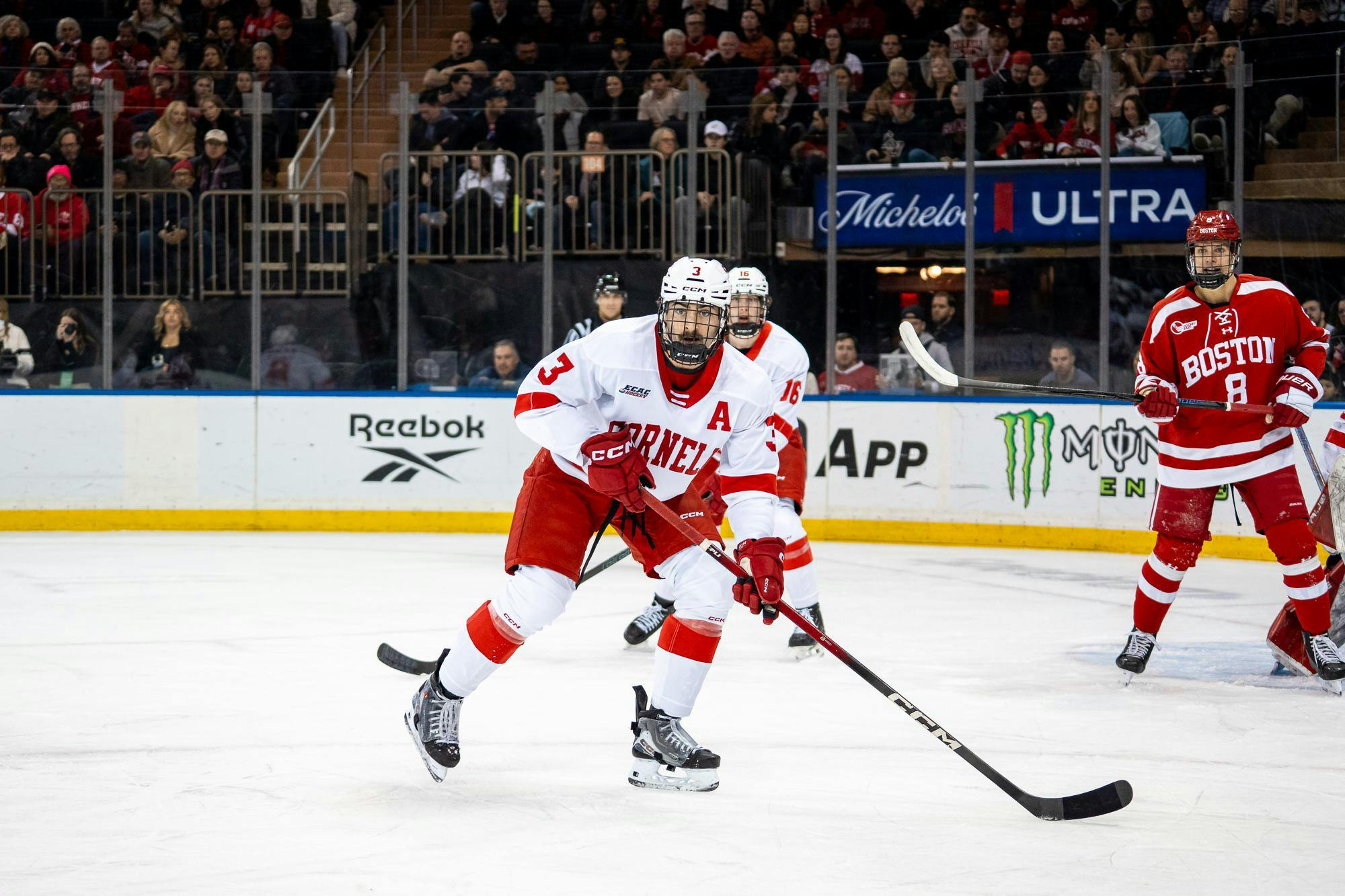
O’Brien plays alongside sophomore defenseman Michael Fisher every Friday and Saturday night. O’Brien — consistently, now — blocks shots, makes plays, adding assists on the breakout every now and then.
He’s playing. He gets to wear the Cornell sweater, and contribute to something bigger than himself. And isn’t that the dream?
“I kind of earned everything I've been given so far and, and that was probably not the way I would have drawn it up on day one when I got here,” O’Brien said. “I didn't have a guarantee coming in that I was gonna play [this season]. I didn't know where I was gonna play.”
Maybe that’s what made things all the sweeter when, after an all-consuming four-year journey, O’Brien heard his name called for the starting lineup on senior night.
Of course, playing 25 minutes a night, every night, for four years would have been great, but there is a sense of complacency that comes with it. Because where else is there to go after that? What else can you work towards?
“I have noticed that, if finally you get it, usually I want more,” O’Brien said. “It just never stops — the pursuit to get better and to grow. So that almost frustrates me a little bit. There's no end goal, it just keeps going.
“And it's a great challenge. It's what keeps you getting up every day. It would really be no fun if you just got to the end and it was all happy.”
***
IT WOULD be nice, though, for a happy ending. O’Brien’s leadership and steadiness on the backend will be vital for Cornell as it readies for the uphill battle that is the postseason.
The 2025 ECAC tournament title is O’Brien’s favorite Cornell hockey moment so far. He wants this year, though, to top that. He wants as much time in the Cornell sweater as possible — because for all that he has given to the program, it has given him so much more in return.
“You kind of take it for granted every day, and then you go on the road and you realize, ‘Wow, Lynah Rink is really something special,’” O’Brien said. “I'm definitely gonna miss being able to put on the jersey.”
When he skated for his final regular season game on Saturday, he made sure not to take anything for granted.
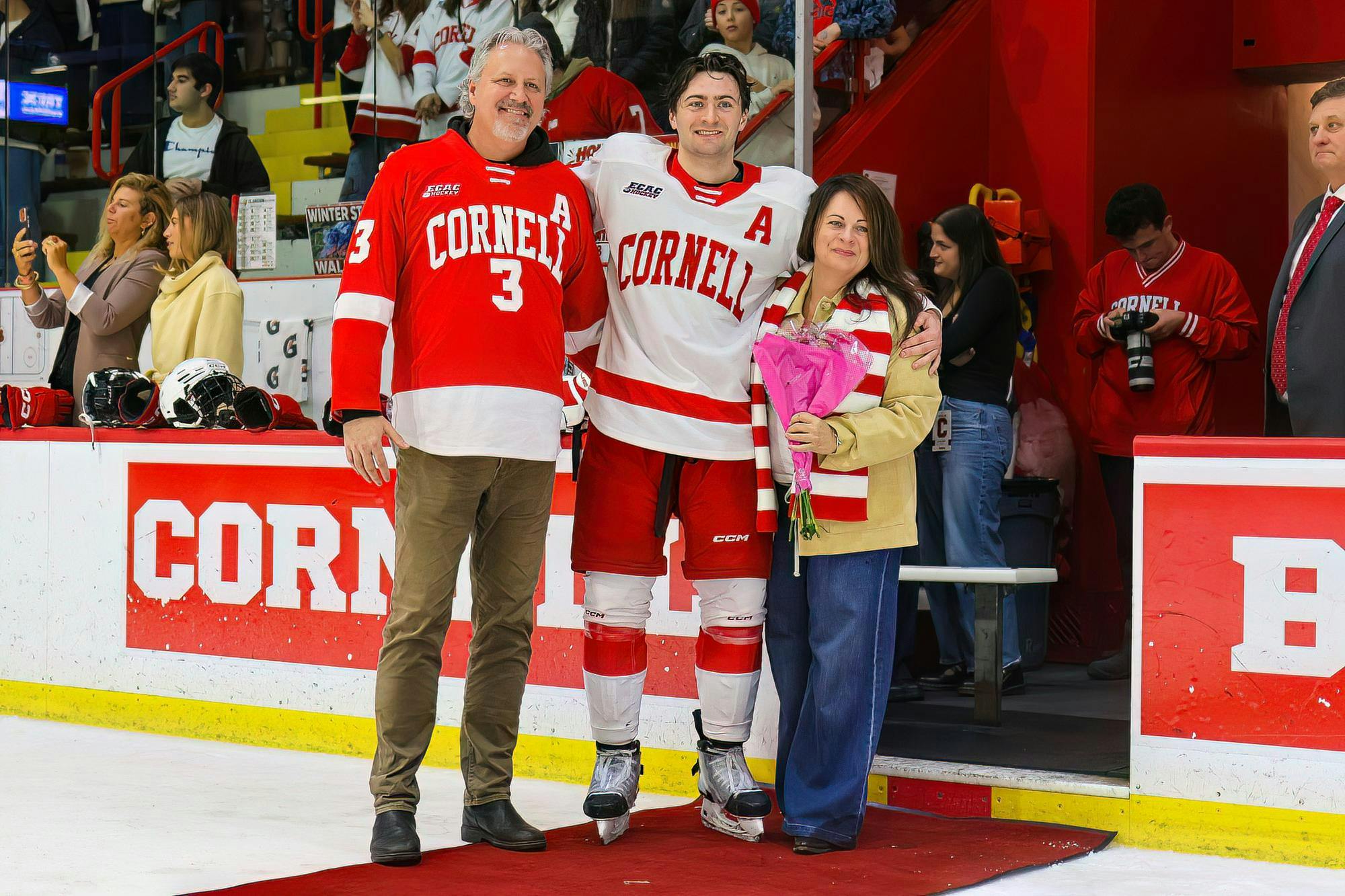
Especially when he got to pose with his mom on the ice after the game.
“My mom's been to every game this year,” O’Brien said. His mom made the cross-continental road trip back in September and has followed her son around the East Coast. “It's been great that I was able to get in [the games], and that she's been able to watch my journey throughout the year as well.”
Because his mom, after all, was the same person calling O’Brien on the third day of his freshman year, making sure he was up in time for his morning workout.
Safe to say O’Brien’s got the wakeup mastered now.
“One of the things I appreciate so much is that with hard work and positivity, you can grow and you can achieve things,” O’Brien said. “I've never played in any other program. I don't know what it's like, but I can't imagine that's the case everywhere. … The values that the team has [and] the program has are things that I want to take with me for the rest of my life.”
Jane McNally is a senior editor on the 143rd editorial board and was the sports editor on the 142nd editorial board. She is a member of the Class of 2026 in the College of Agriculture and Life Sciences. You can follow her on X @JaneMcNally_ and reach her at jmcnally@cornellsun.com.


