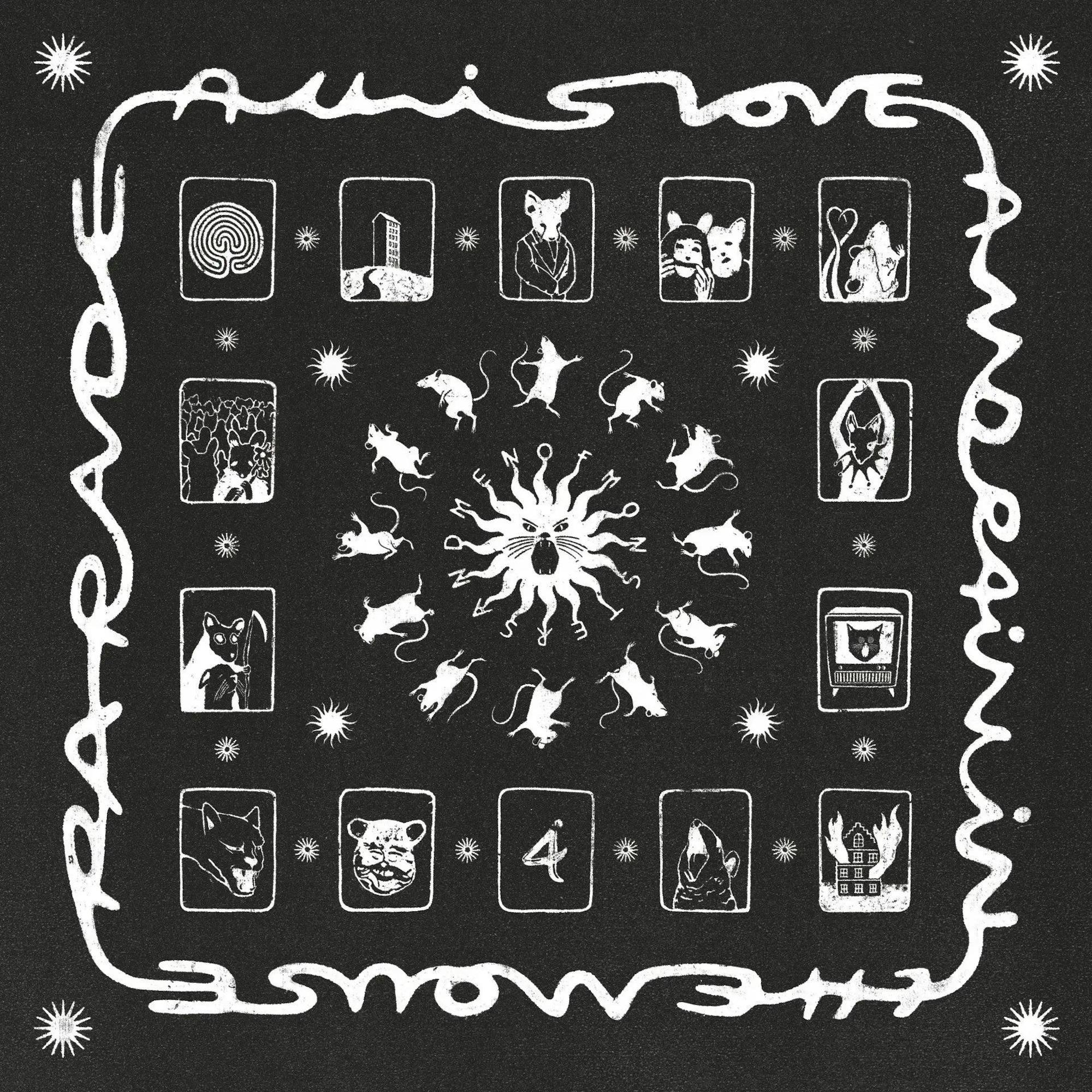
If any band could convince me to flee society and live a nomadic life in the mountains, it would be Of Monsters and Men. Each of their songs is packed with a sense of nostalgia and rebellion that bucks tradition and makes the heart wild, and their new album, All is Love and Pain in the Mouse Parade, is no exception.
This album is an ode to the duality of the human experience. It embodies the pain of losing someone you love while simultaneously acknowledging that pain is part of life. Listening to the album in order is vital, so take your Spotify off shuffle and let yourself experience this journey of loss, endurance and acceptance.
The first track on this album is “Television Love,” a single that was released earlier this summer to preview the rest of the album. The upbeat, staccato strings that open this song remind me of The Great British Baking Show, spring, and essentially anything bright and sunny. The lyrics don’t align with this fact-paced, joyful feel, though, as lead singers Ragnar Þórhallsson and Nanna Bryndís Hilmarsdóttir sing, “I’m bleedin’ love all over the place,” and lament the fictional quality of “television love.” Choosing this song to both introduce and preview the album is significant because it fully exhibits the band’s willingness to be vulnerable and open about the struggles that they have faced, and prepares listeners for the raw depth of the rest of the album.
Throughout the album there is a recurring idea of feeling lost in life and the accompanying worry. Both ideas are particularly present in the two songs, “Dream Team” and “Ordinary Creature.” “Dream Team” focuses on the difficulty of managing mental health complications while in a relationship, following up on the efforts of “Television Love” to deromanticize an entirely optimistic outlook on love. Similarly, this song is also deceptively cheery, with a beat that you can tap your foot to accompanied by lyrics that describe the feeling of being lost in life and afraid of the “sundown.” Still, amongst these struggles, there is an ongoing narrative of staying present in your relationship even when the world feels heavy. Subsequently, “Ordinary Creature” addresses these ever-present worries, effectively bookending the album with a satisfying resolution. The song bids “farewell” to fear and personifies it, thanking it for providing the struggle that is necessary for growth.
Now, I cannot make an honest review without acknowledging some of the album’s shortcomings. Admittedly, many of the songs feel repetitive to the point where it was hard for me to distinguish between them, especially in the middle of the album. For me at least, “Tuna in a Can,” “Kamikaze” and “The Towering Skyscraper at the End of the Road,” all blur together, given that they all contain the same combination of piano, acoustic guitar and snare drum, and address feelings of self-criticism over lost love. Although these feelings are poignant, these songs ultimately feel like filler between the stand-out tracks.
To me, the best part of the album, the stand-out tracks, are the final four tracks. In particular, I believe that “Styrofoam Cathedral” has the potential to be as popular as the band’s debut single, “Little Talks,” the song that brought them international fame. “Styrofoam Cathedral” starts out quiet but builds slowly with a hopeful rise into the chorus: “I am honestly flawed,” repeating over and over as an anthem of the freedom of self-acceptance. After hearing the first nine songs in the album, songs that describe the fear of losing love because of mental blocks and uncontrollable worry, “Styrofoam Cathedral” is a hopeful breath, a promise that this too shall pass.
Although the end of the album seems to indicate a break in the clouds, a hopeful light after a series of songs about darkness, there remains an underlying acknowledgment that pain is just as important in life as love. Following on is “The Block,” a song whose vibe is most similar to that of the final scene in La La Land. The fast-paced, nostalgic rhythm from before is lost here as the band concedes that not all stories have a happy ending, but that doesn’t make them tragedies. Here, Ragnar and Nanna sing about the difficulty of saying goodbye and the slow return from that grief. It seems an impossible feeling to bounce back from, yet, as “The Block” transitions seamlessly into the namesake of the album, “Mouse Parade,” the importance of moving on from this grief is made clear.
“Mouse Parade” is written in poetic stanzas, maintaining the key signature and chords from before with minimalistic, ghostly lyrics layered on top. The lyrics detail a warm home, the community that was created against all odds, and slowly throughout the song, ambient noises of this home become audible underneath the lyrics. Sounds like quiet conversation and the clinking of utensils are intermixed with pops of laughter and piano chords, creating a natural, comfortable environment where the heaviness of the rest of the album can settle and dissipate. While listening to this track, the second-to-last in the album, I caught myself closing my eyes to fully immerse myself in the environment that the band had created here, allowing myself to feel and process each emotion that came up. I tried listening to the album out of order, but when “Mouse Parade” came up out of context, it didn’t have the same effect.
Finally, the credits roll on the album with the fittingly named “The End.” This last song is simple, only the two lead vocalists and a single guitar, singing “It’s alright in the end.” The last chord is left suspended, unresolved, as if the band wants the listener to come to terms with the fact that despite everything, the worry, fear, loss and flaws, everything turns out the way it was meant to be.
Gia Lish is a freshman in the College of Arts and Sciences. She can be reached at gml223@cornell.edu.

Gia Lish is a member of the Class of 2029 in the College of Arts and Sciences. She is a staff writer for the Arts & Culture department and can be reached at glish@cornellsun.com.