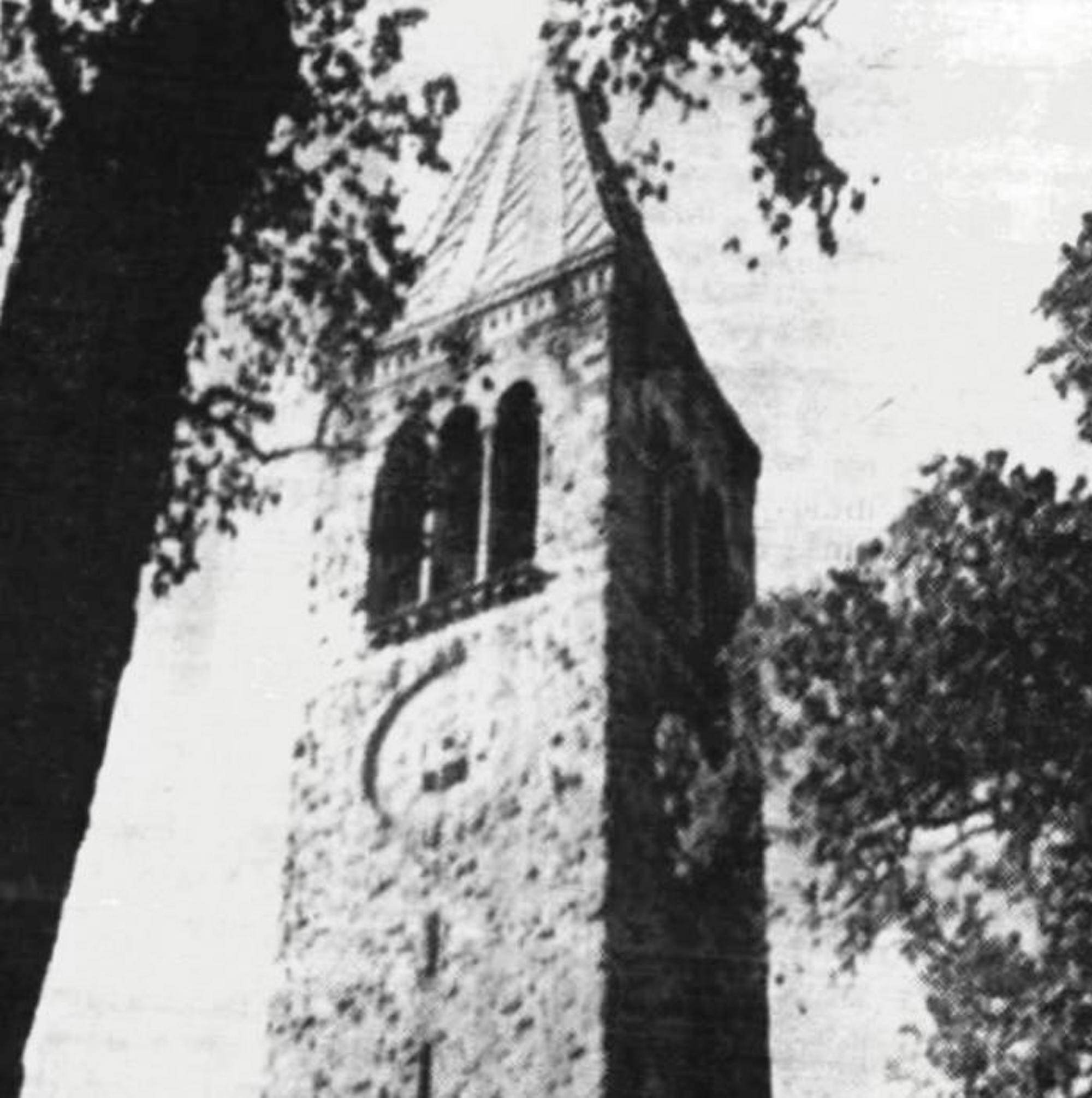
Today, the McGraw name evokes the image of Cornell’s iconic clock tower, newly renovated as of July 30. But the family name holds the history of more — a Supreme Court lawsuit, a great pumpkin mystery, a feminist philanthropist and a day one Cornell tradition, the Cornell Chimes.
To honor McGraw Tower’s recent restoration, The Sun took a trip down memory lane and uncovered a chronicle of quintessentially Cornell moments in time that are marked by the clock tower’s presence.
Constructing McGraw Tower
Today’s McGraw Tower and Uris Library were once a unified establishment known as The University Library, which opened in October 1891. The library project was funded by Trustee Henry Sage and the building was designed by William Henry Miller, Class of 1872, who also designed Barnes Hall, according to both University Architect Margaret McFadden Carney ’81 BArch ’81 and Corey Earle ’07, an American studies lecturer.
The official library took 23 years after the University’s 1868 opening to be constructed, since classrooms and student housing were being built. Massive debates took place between the involved trustees, benefactors and University administrators on the final location of the library. The discussion lingered throughout Cornell’s first president, Andrew Dickson White’s, presidency and into President Charles Kendall Adams’ term, the University’s second president.
Carney shared an anecdote that illustrated how the current home of McGraw Tower and Uris Library was chosen.
“While walking one evening [Adams] found himself standing at the crest of Libe slope, looking towards the lake and the lights of houses on West Hill and was moved by the powerful beauty of the site,” Carney wrote in a statement to The Sun. “‘Here the Great Library will stand’, he said with great emphasis to the faculty member with whom he was walking.”
Before the official library was constructed, McGraw Hall, which was built in 1872, served as the campus library. McGraw Hall’s tower was the Chimes’ first home.
“[McGraw Hall] initiated a tradition of inseparable partnership between the books and the chimes, the most important central resource that defined the purpose of the institution — The symbolic core of the university and the beginning of an icon,” Carney wrote.
Earle highlighted the connection between the ringing chimes and the books.
“It was White who first suggested a tower be incorporated into the building plan,” Earle wrote in a statement to The Sun. “White felt that books were the heart of a modern nonsectarian university, and so the most iconic and prominent building should be the library, not the chapel.”
After several years of project development and delay, a competition between architects Henry Van Brunt and Miller began in 1888. The judgement of Trustees and the Library Committee that oversaw the building plans would determine the final architectural designs and lead architect.
Van Brunt’s concept featured the building in more of a “Cathedral configuration,” as described by Carney. President Adams and AD White rejected this design due to its “cruciform plan” and “overly complex ornamentation,” according to Carney.
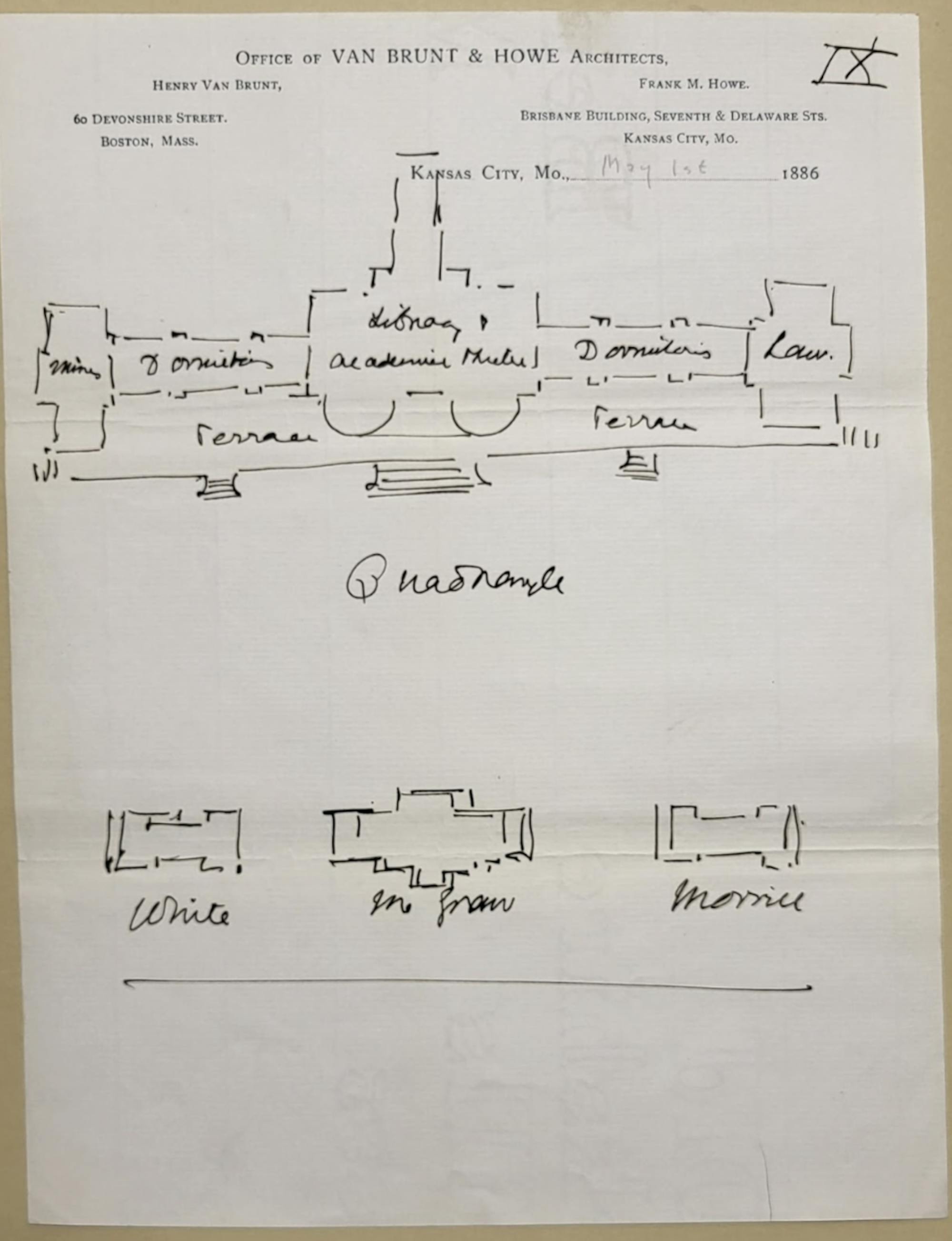
“In great contrast, the Miller design featured a simple and elegant tower, appealing aesthetically and more functional than Van Brunt’s, incorporating an innovative plan,” Carney continued, “The tower’s delicate connection to the rest of the library was a key factor, as it allowed the tower to stand apart, graciously, from the mass of the building, maintaining a high level of visibility from all sides of the campus and from the town at the base of the hill.”
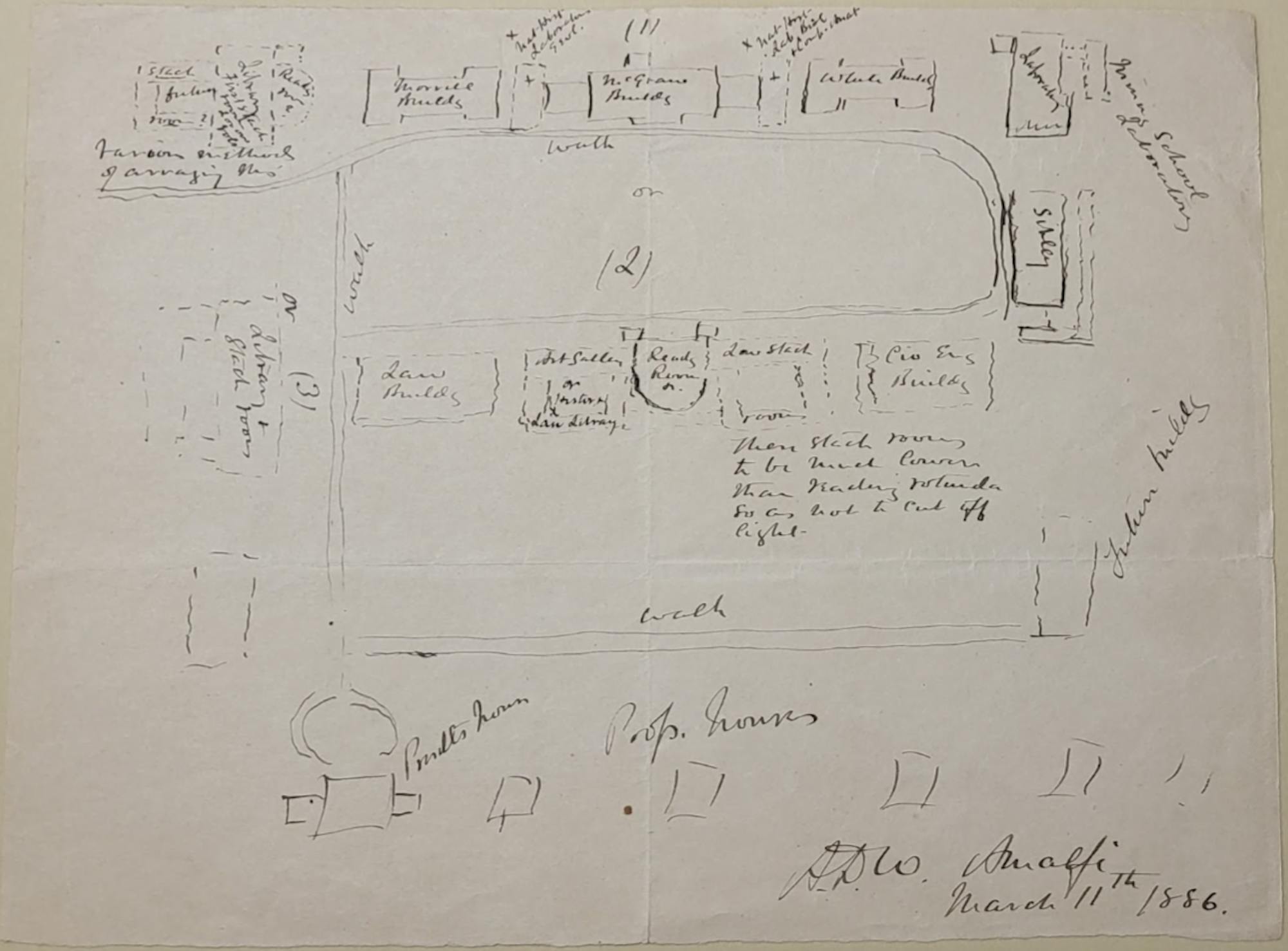
Miller won over the committee with the sketch of the tower sitting adjacent to the rest of the library, allowing for complete visibility of the tower from any location on campus, according to Carney.
Construction began immediately following the award and was completed in October 1891.
Jennie And The Chimes
About 157 years ago, Cornell’s opening ceremony took place near McGraw Tower’s base on Oct. 7, 1868. A wooden stand was placed on the ground, and the first chimes were played. In attendance was Jennie McGraw Fiske, gifter of the chimes and prominent female philanthropist, surrounded by the University's predominantly male early leaders and donors.
McGraw Fiske was born in 1840 as the daughter of John McGraw, early trustee of the University, in Dryden, NY. She grew up in a wealthy family that was dedicated to funding Cornell’s beginnings. She continued this legacy into her adult life, and endowed the first chimes to the University.
McGraw Fiske did not stop at the chimes. Her will stated that a portion of her estate be left to fund a library building upon her death, according to Earle. However, her will violated a New York State law, in which women were not allowed to allocate more than half of their estate to a charity cause if she was married prior to death.
Her husband, Willard Fiske, launched a lawsuit, known as The Great Will case, that was contested in the U.S. Supreme Court in 1890. The court ruled in favor of Fiske, concluding that the University could not receive the donation.
With The University Library money held up in federal court, Sage, known for funding the construction of Sage Hall as the first women’s dormitories on campus, gifted the funds to build the combined library and tower. He dedicates the building to McGraw Fiske in a gold plaque outside of modern Uris Library.
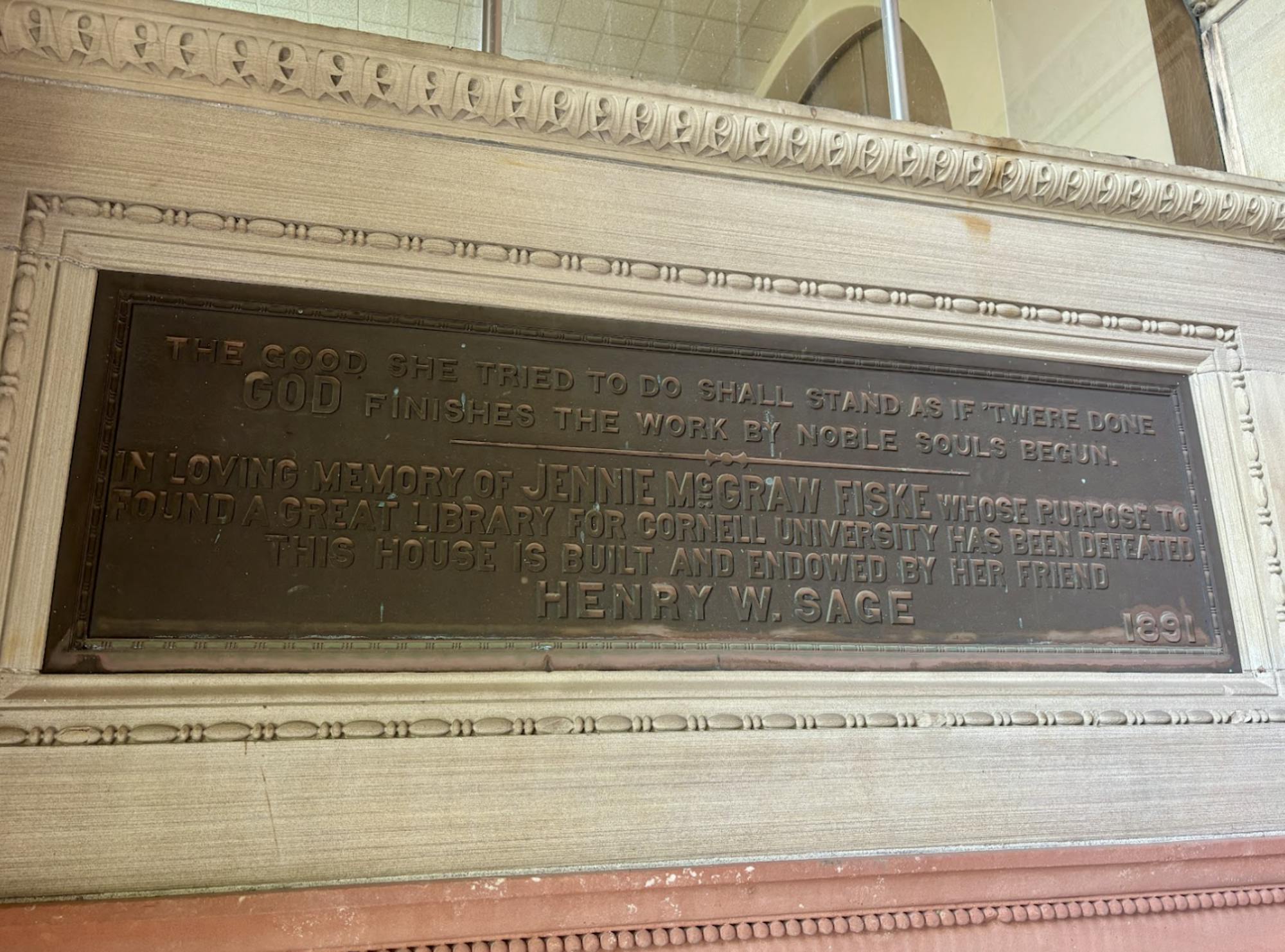
“Jennie McGraw was passionate about the need for this building and committed in her will a large sum of money for that purpose,” Carney wrote. “She believed deeply in the mission of Cornell and Ezra Cornell’s vision of an institution where any person could find instruction in any study.”
McGraw Fiske donated the original nine chimes, which were first played on the wooden scaffold, then moved to its first tower in McGraw Hall in 1872. The chimes moved into their final home in McGraw Tower in 1891. Growing over the years, the chimes now include 21 bells, played throughout the day and night each day of the week.
Architectural historian and Cornell dean Kermit C. Parsons wrote in his book, The Cornell Campus, "The tower marked a meeting place of the useful and the beautiful; of the dual ideals of the intellectual and practical men who had done most to build Cornell.”
In covering the building's opening in 1891, The Sun described it as “the pride of every Cornellian’s heart.”
The Pumpkin Heard ‘Round the World
McGraw Tower became an iconic symbol of Cornell following its opening. Earle described it as a “prominent and striking building,” one which united Cornellians together, especially with the addition of the chimes.
However, Earle recalls a time when the clock tower became iconic to the world beyond the campus. It was 1997, and on the morning of Oct. 8, students woke up to find a pumpkin speared on the spire of McGraw Tower.
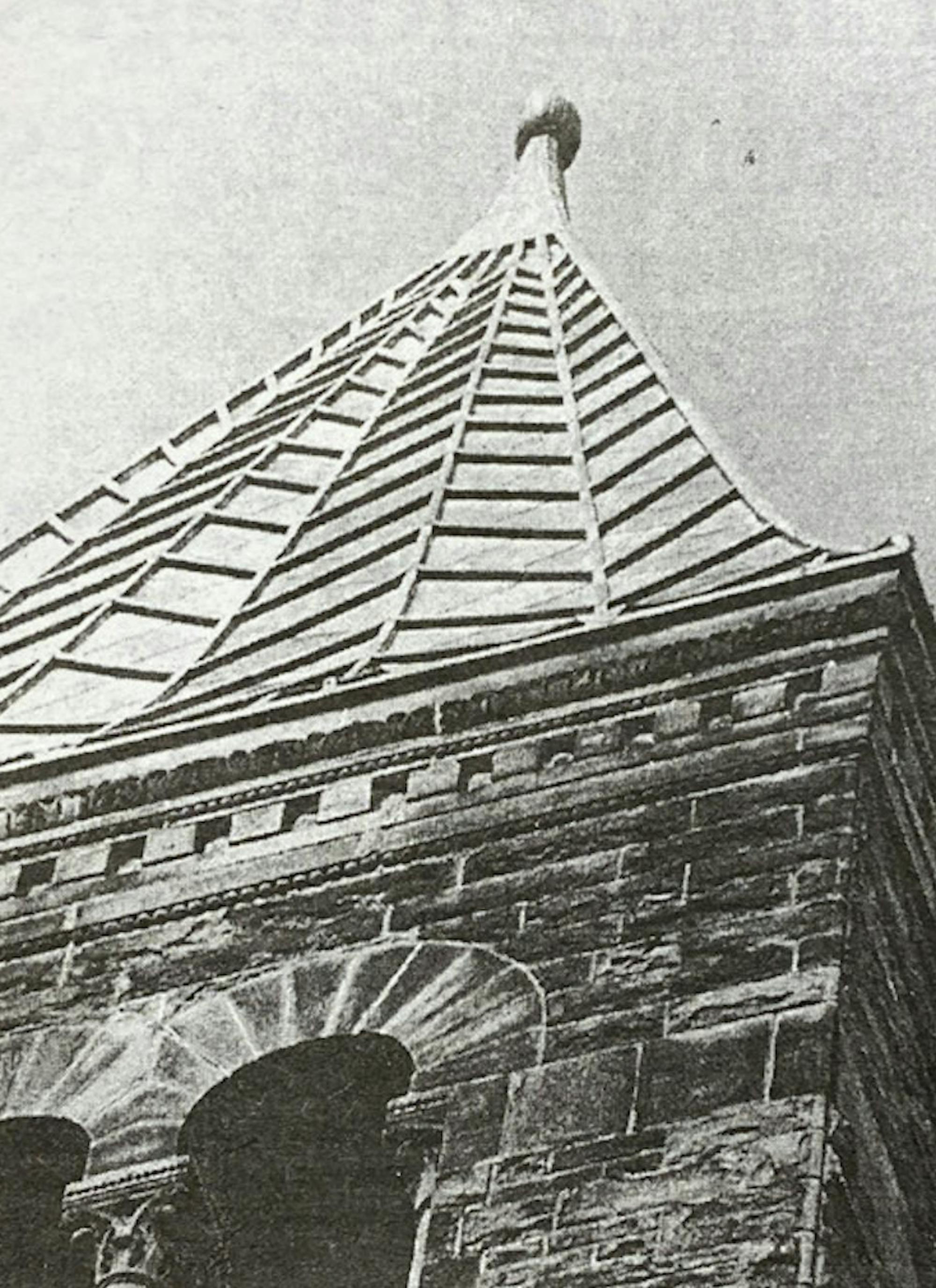
“The 1997 clock tower pumpkin incident is likely the most famous moment in the building's history, resulting in significant national news coverage and attention for over five months,” Earle wrote.
What became coined the “Great Pumpkin Mystery” by several news outlets was covered by The New York Times, ABC News’ World News Tonight, Associated Press, as well as other news outlets in the days following its discovery. Former Sun Editor-In-Chief Hilary Krieger ’98 was interviewed by Matt Lauer on NBC’s The Today Show later that month on the pumpkin story.
The Sun ran a daily “Pumpkin Watch” until Halloween. University officials decided that obtaining the pumpkin off of the spire posed more of a threat than if it rotted and fell. By March 1998, the pumpkin fell; no culprit was caught for the prank that took the world by storm.
The Mark Left by McGraw
Current students stay involved with McGraw Tower every day. Head Chimes Master Kevin Wang ’26 recalls the Chimes Advisory Council weekend in 2023, where, as a new member of the Cornell Chimes, he had the opportunity to play the bells with and meet alumni of the chimes from over the years.
“As a new chimes master at the time, I had a great time sharing stories with all the alumni. The tower has had a long history, but our experiences have a lot in common,” Wang said.
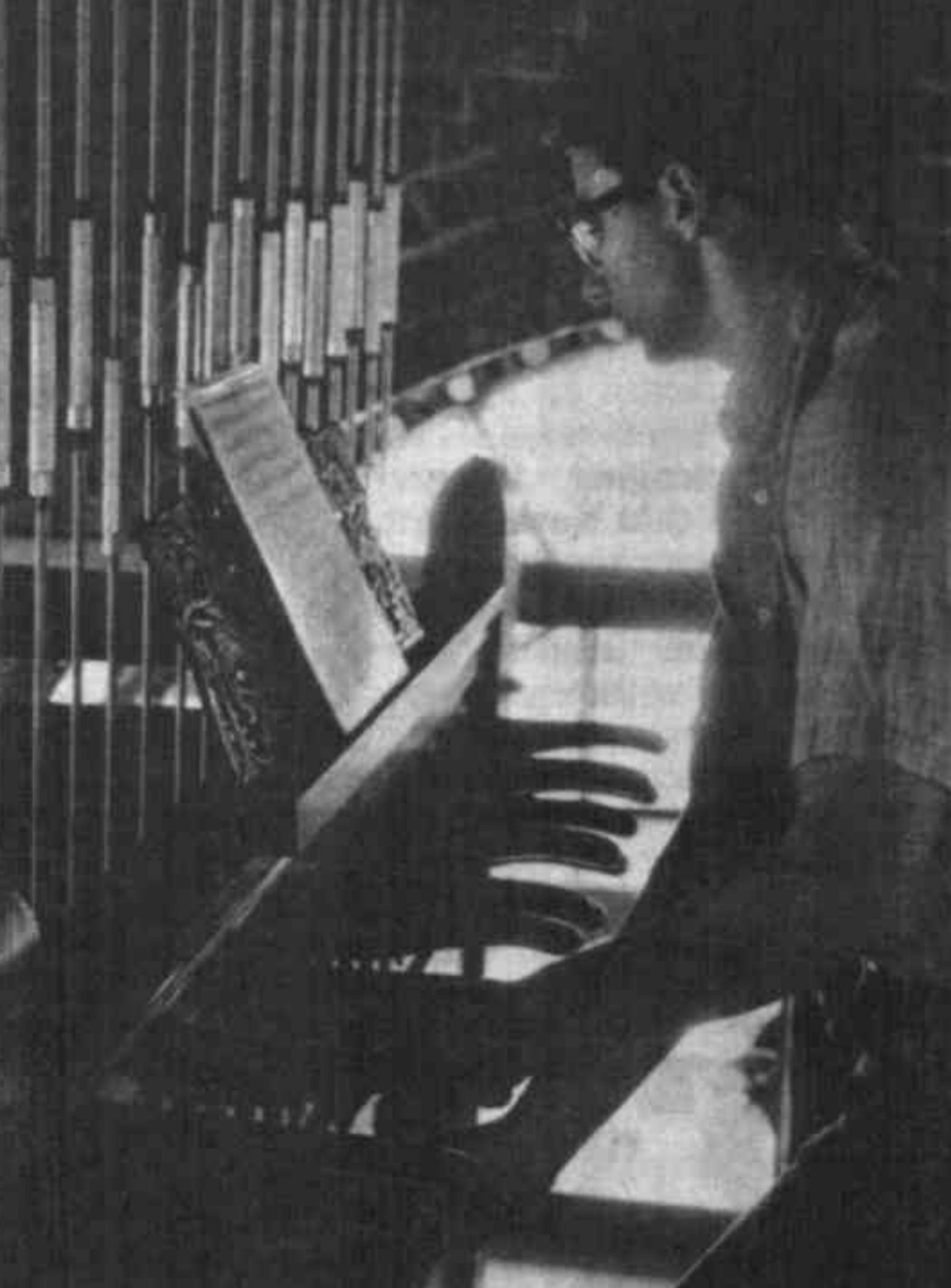
Cornell Chimes is a student organization that performs daily concerts from McGraw Tower. (Sun File Photo)
According to Carney, there are no additional projects planned for the clock tower, “though there is a desire to renovate space within the Uris Library to improve accessibility and the general organization of space within it,” Carney wrote.
134 years after McGraw Tower and Uris Library’s opening, the establishment serves as an active hub of student studies and rings in the day with the chime of the bells. The recent refurbishment to the roof of the tower was only the second in its history, according to Carney.
“The tower and its bells are how we mark the passing of time at Cornell,” Earle wrote. “They're ubiquitous, they're celebratory, they're reflective. For alumni, they're nostalgic. They are inextricably tied with a place, with the experience of being a Cornellian.”

Jane Haviland is a member of the Class of 2028 in the College of Arts and Sciences. She is the features editor for the 144th Editorial Board and can be reached at jhaviland@cornellsun.com.