


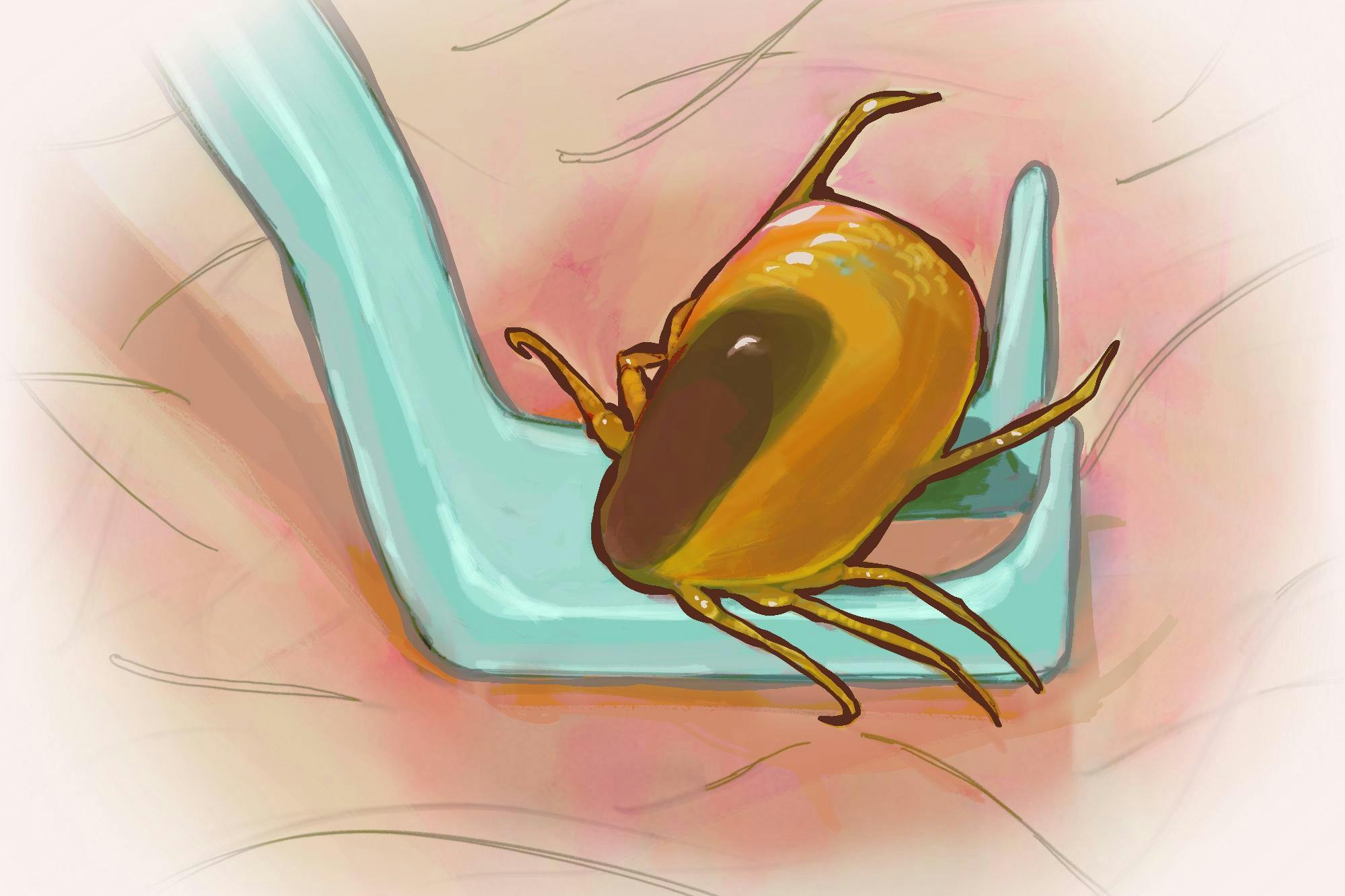
Reported cases of Lyme disease in Tompkins County more than quadrupled in July 2025 compared to July 2024, according to data from the Tompkins County Health Department.
In an email sent to The Sun, Emily Mader, an extension associate in the Department of Entomology and program manager of the Northeast Regional Center for Excellence in Vector-Borne Diseases, wrote that Ithaca, “is a region endemic for multiple species of tick,” emphasizing the public health concern for the common blacklegged tick.
The reported number of blacklegged ticks in the northeast has been on the rise in recent months. Borreliosis, more commonly referred to as Lyme disease, is the most common illness spread by this species of tick.
“Tick populations have had a boon year across the northeastern U.S. this year, and this includes upstate NY,” Mader said.
The New York State Department of Health tracks tick activity in Tompkins County and the Tompkins County Health Department conducts annual reports of tick-borne diseases, including Lyme disease, anaplasmosis and babesiosis.
July 2025 had the most recorded cases for all three diseases. This year, cases of Lyme disease skyrocketed to 286 in July, compared to the 60 in July 2024.
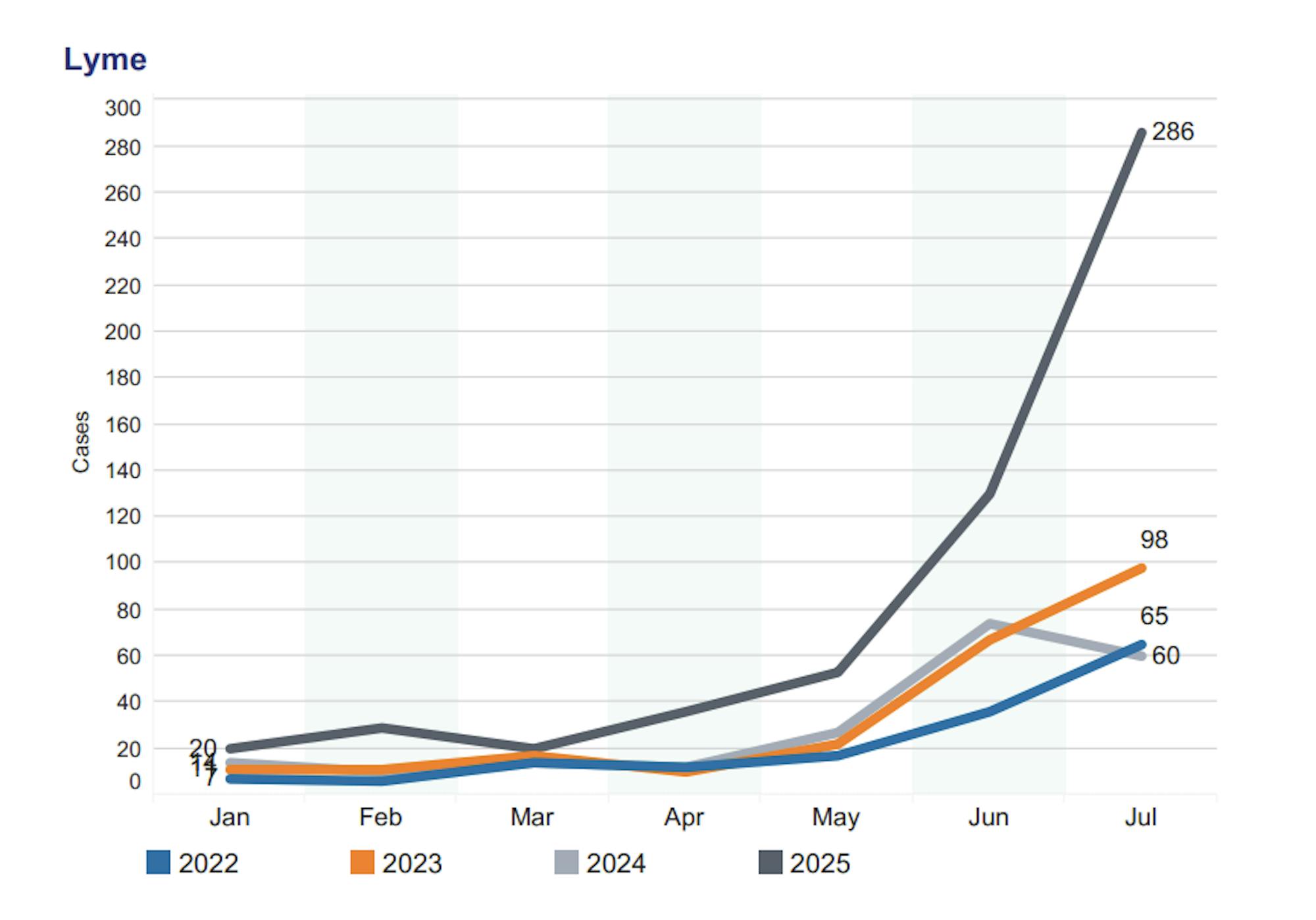
Lyme disease cases in July 2025 (dark grey) have more than quadrupled compared to those reported in July 2024 (light grey). (Graph Courtesy of the Tompkins County Health Department)
Jordan Dickson ’28, a guide on one of Cornell’s Outdoor Odyssey Program trips this year, noted that two ticks were found on her trip this year.
“Both [ticks] were found quickly and were removed before the ticks would have time to transmit diseases,” Dickson wrote in a statement to The Sun. “We prepared for this by doing frequent tick checks.”
Deer, which are a primary host for the blacklegged tick, are present on campus. In 2014, the Village of Cayuga Heights and Cornell worked with faculty from the Department of Natural Resources to study how a deer management program affected tick populations.
According to the final report, the program was unable to limit deer presence on campus to reduce their negative impact.
Prof. Bernd Blossey, natural resources and the environment, and director of the Ecology and Management of Invasive Plants Program, was part of the deer management program.
“We have argued with the [Cornell] administration to be more aggressive in terms of deer management on campus,” Blossey said.
Blossey emphasized the need for greater involvement from the University to address this year’s tick issue as it poses a health concern to the community.
“They’re supporting us a little bit, but not really in a very effective way,” Blossey said. “There has been no response [to the tick surge] even though the health of employees [and] the health of students is being affected by it.”
According to Blossey, the City of Ithaca has not taken action regarding the deer population despite the risks.
To ensure the safety of students, Cornell offers a Workday Learning Module on tick safety that any member of the Cornell community is able to take.
According to Mader, the best way to stay safe from tick-borne diseases is to avoid tick habitats which are often found in areas with a lot of leaf litter and along the edges of trails where shrubs, brush and tall grass grow. Mader also noted that effective ways to avoid tick bites include using EPA-approved insect repellent and wearing long pants and long-sleeved shirts.
Mader also advises that individuals should always check for ticks after being active outdoors and if any ticks are found, to remove them as soon as possible. It is not necessary to go to the doctor or urgent care to have a tick removed.

Hussam Kher Bek is a member of the Class of 2028 in the College of Arts and Sciences. He is a staff writer for the News department and can be reached at hkherbek@cornellsun.com.


