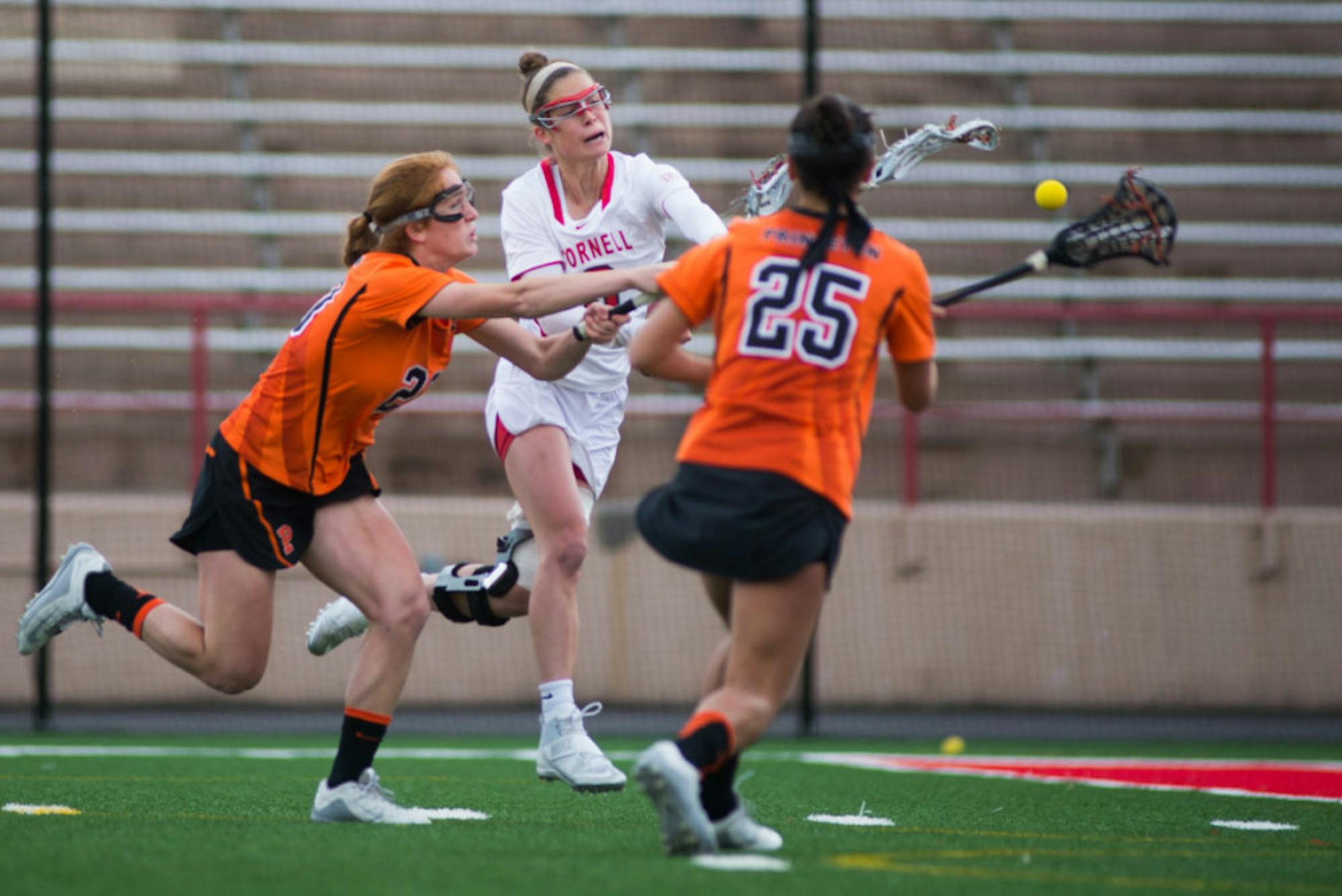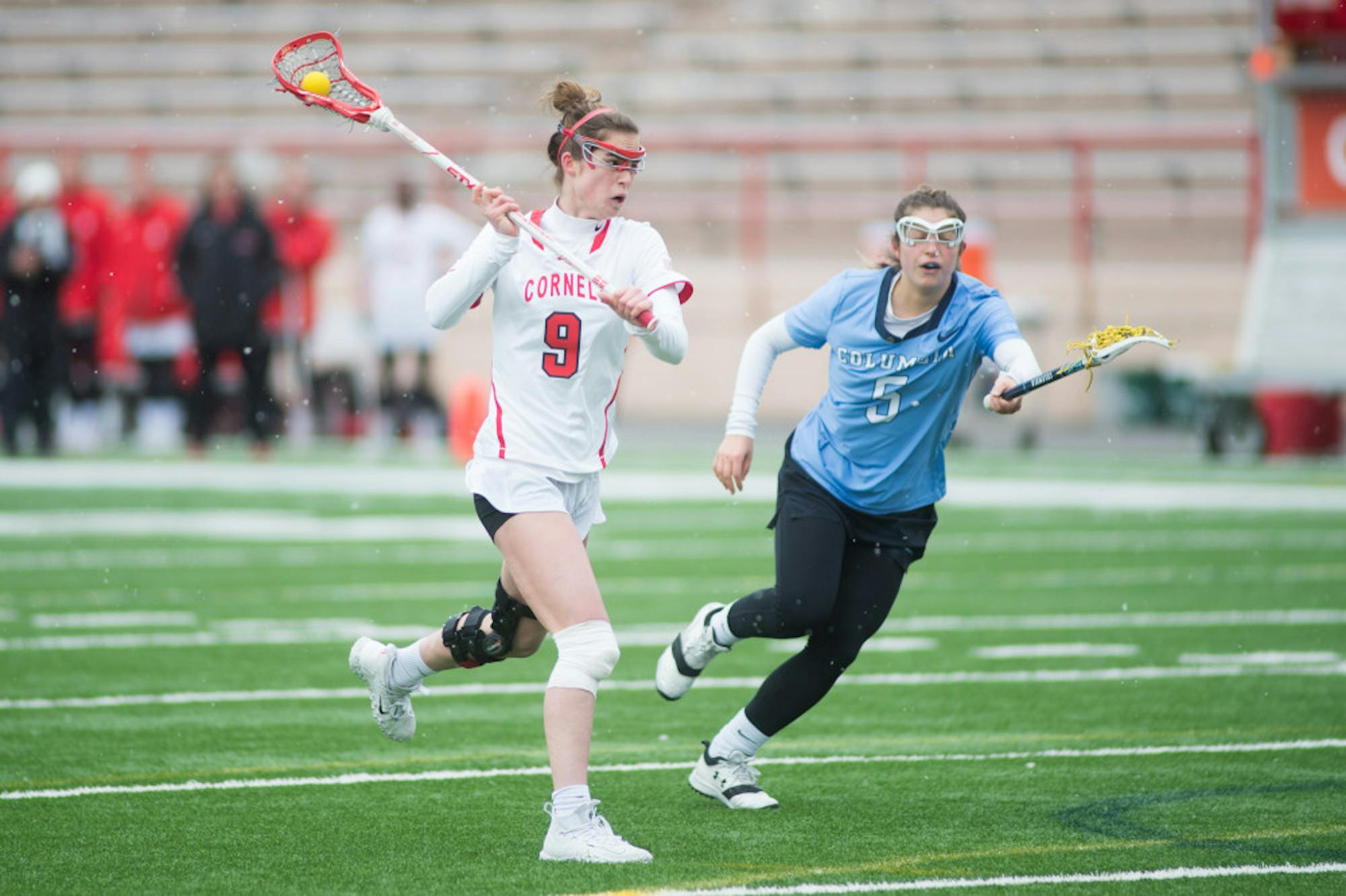
More than 30 percent of athletes who have sustained an ACL injury never return to the same level of play, so just stepping on the field to play Division I lacrosse again is an incredible feat for senior captain Ida Farinholt.
However, even after the misfortune and devastation of tearing her ACL a second time — an injury with only a 4.3 percent chance of recurrence — the midfielder was able to go beyond just returning to play to tally a whopping 31 points, 13 ground balls, seven caused turnovers and 34 draw controls over her junior season to reestablish herself as a lethal all-around force for the Red.
A talented field hockey, indoor track and lacrosse athlete in high school, Farinholt garnered regional, state and national lacrosse accolades.
She was able to successfully translate her athletic prowess to the collegiate level, making an immediate impact as a freshman by starting three of the five games she played and averaging over a point per game.
“[Ida] came in as a phenomenal freshman,” said strength and conditioning coach Erika Rogan. “Movement-wise, her athleticism was outstanding.”
Even when a torn ACL cut her freshman campaign short, Farinholt remained optimistic about her return to play.
“I thought, ‘It’s my freshman year. It’s fine. I’ll bounce back from this,’” she said. “I didn’t think much of it. I just really wanted to play again.”
However, when she tore the same ligament in the same knee less than a year after the original injury in her first scrimmage back as a sophomore, the optimism was soon replaced with fear.
“[Tearing my ACL in my first game back] was the hardest thing for me,” Farinholt said. “I think that mentally screwed me up a little bit. I would’ve felt better about it if it was my other knee, but because it was the same one I was just thinking ‘Is my knee going to fail me again?’”
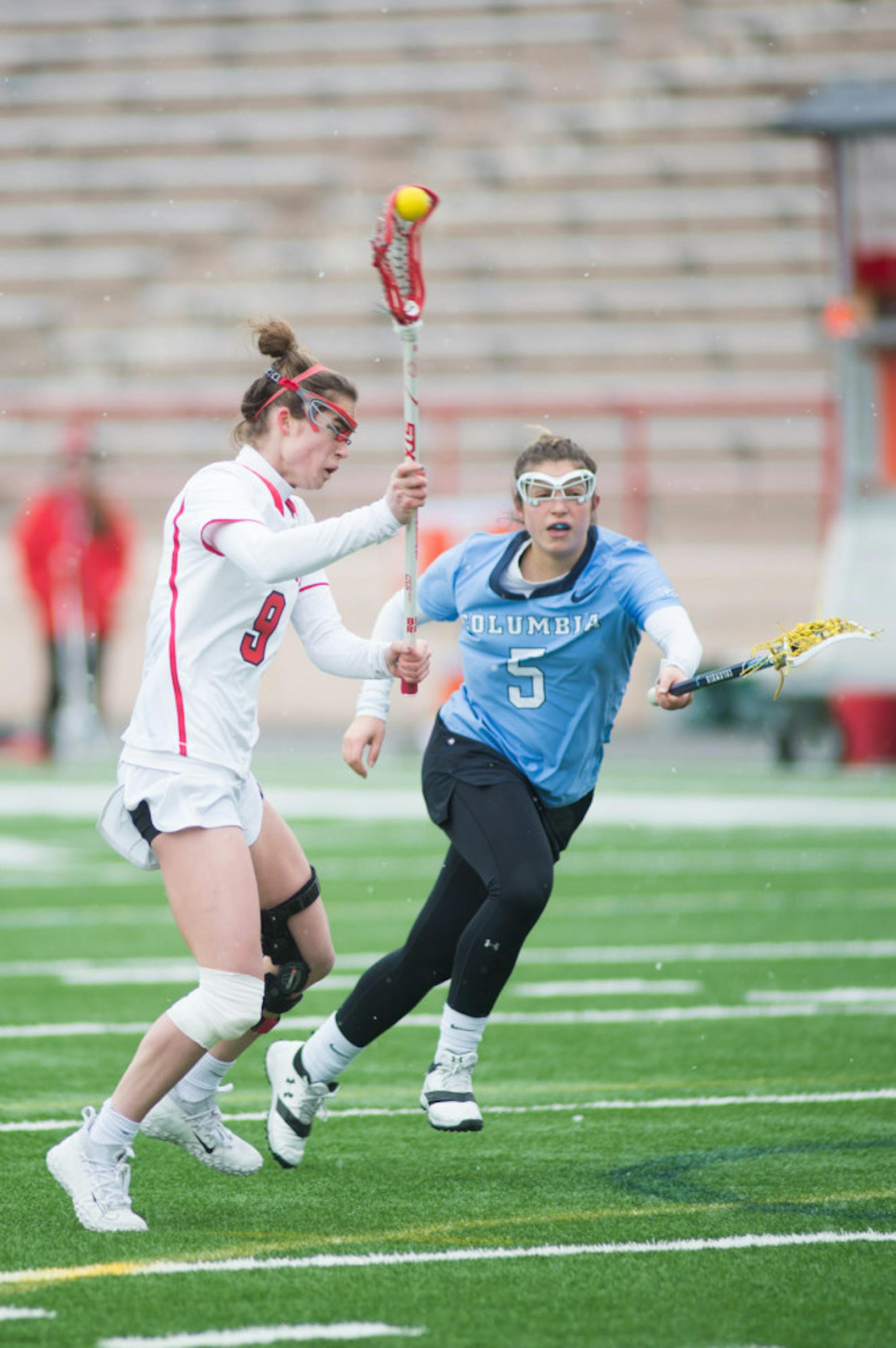
The Road to Recovery
Casting all fears aside and having just gone through the tedious rehab process, Farinholt made the tough decision to dive back into the process a second time, which was grueling both physically and mentally. “[Getting over the fear of reinjury] was really hard,” Farinholt said. “But my parents were so supportive — they never told me to quit after tearing [my ACL] twice. They were supportive of whatever I wanted to do.” As someone who had played lacrosse her whole life, being sidelined by injuries in back-to-back seasons only strengthened Farinholt’s resolve to return to the field. “[Being injured] gave me a good perspective of how important every player is, even if they’re not playing,” she said. “I realized I wasn’t going to quit even if I was going to be injured all four years.” Fortunately, Farinholt has not been injured all four years and her diligence to her rehab has paid off for her and her team in her junior and senior seasons. “She did an awesome job [with the rehab process],” Rogan said. “Everything I told her to do she would at least try it and give me good feedback. She has pushed herself — she’s regained her speed, her strength, her power. Overall, her dedication to get back on the field has been tremendous.” With the team’s back against the wall, Farinholt really stepped her game up in the 2017 NCAA tournament, recording two goals and an assist in the first round against Notre Dame and three goals and a school record-breaking six draw controls against Princeton in the second round. “In the beginning, it wasn’t easy because it was hard for me mentally to get back into it,” Farinholt said. “I wasn’t as aggressive of a player, but I think once I had five games under my belt I was fine.” The pressure of the tournament allowed Farinholt to think less about her devastating injuries. “I truly found myself at the very end [of the season] during the NCAA tournament,” she said. “It was so much easier for me not to focus on my knee because we had to win every game to move forward.”Inspiration Through Perspiration